Real Estate Private Equity Hawaii: Top Firms in 2026
Key Facts
- Between 15 and 20 active private equity, real estate private equity (REPE), and venture capital firms operate with a Hawaii focus, spanning hospitality, multifamily, mixed-use development, middle-market buyout, and EB-5 structures.
- Trinity Investments leads the field with $6.6 billion in assets under management as of September 2025, having invested in more than $10 billion of assets since inception, including nearly $7 billion in hotel and resort assets representing over 15,000 keys.
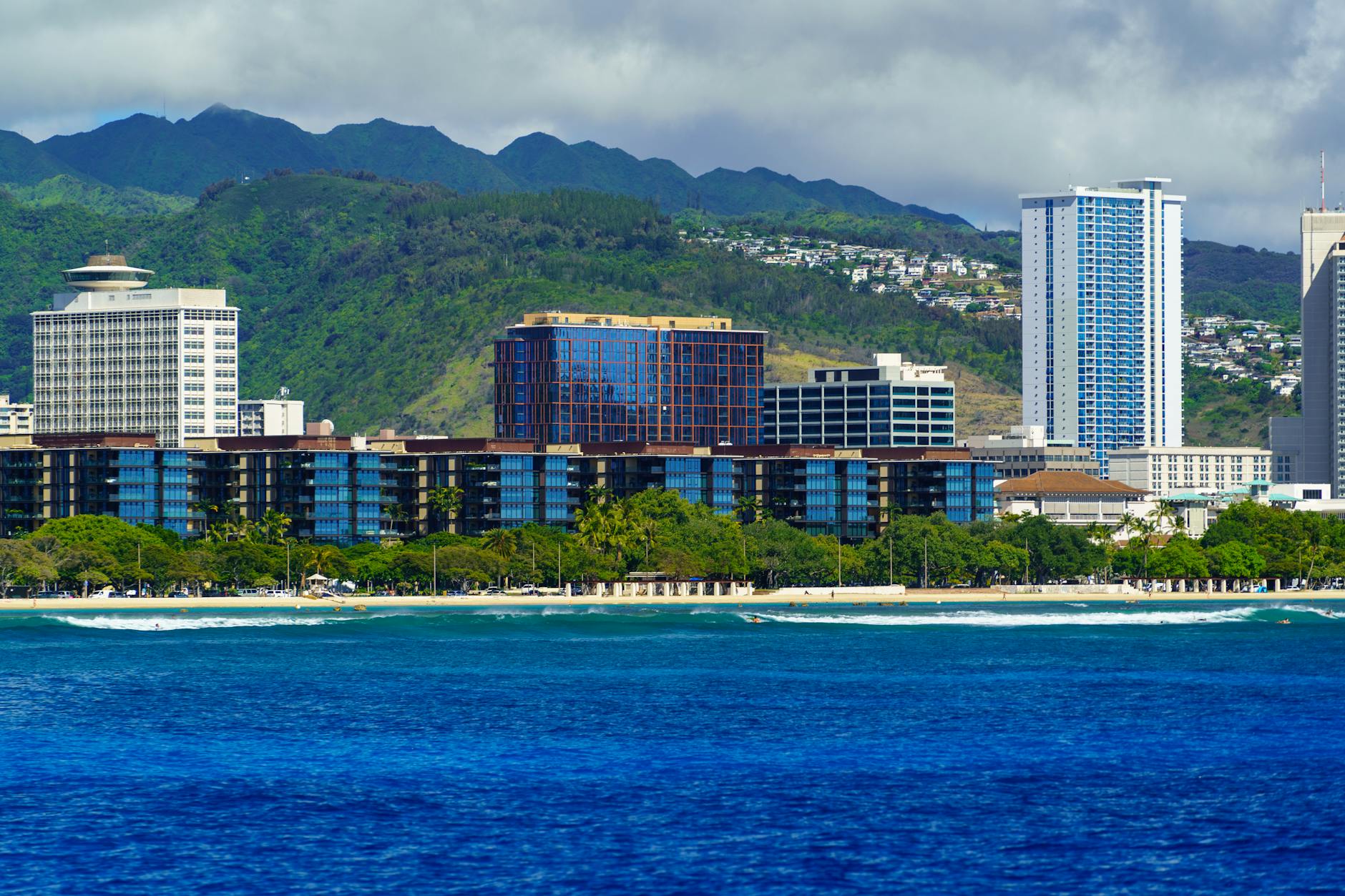
- Honolulu is the dominant hub, hosting the majority of locally based general partners (GPs) across all strategies; Maui, Kauai, and the Kona coast attract specialist hospitality and luxury residential capital.
- Hospitality and resort acquisition is the dominant strategy, with firms including Trinity Investments, BlackSand Capital, JL Capital, and Civitas Hawaii Fund all targeting hotel assets across the islands.
- Hawaii recorded 9.6 million visitors in 2023 generating $20.8 billion in visitor expenditures, with Kauai average daily rate (ADR) and revenue per available room (RevPAR) reaching all-time highs that same year.
- Blackstone's $2.3 billion announced take-private of Alexander & Baldwin marks the largest recent institutional capital deployment in Hawaii commercial real estate.
- Geographic constraints are a defining characteristic: Oahu has only approximately 30 market-rate residential properties with 100 or more units, limiting deal flow for large funds and protecting returns for those with access.
Hawaii Real Estate Private Equity: Market Overview
Hawaii's real estate private equity market sits at the intersection of a trophy tourism economy, acute land scarcity, and deep community ties that mainland GPs routinely underestimate. The state's geographic isolation creates high barriers to entry that support valuations across hotel, multifamily, and commercial assets, while the same constraints compress the investable universe for any single fund manager seeking scale.
Hospitality assets anchor the investment thesis for the majority of Hawaii REPE capital. Tourism drives the economy: 9.6 million visitors spent $20.8 billion in Hawaii in 2023, and Kauai posted all-time RevPAR highs that year. This demand concentration makes hotel and resort acquisitions the highest-conviction play in the market, attracting both locally based specialists and large institutional fund managers.
Honolulu and the broader Oahu market account for the majority of PE firm headquarters and deal activity, with Waikiki, Ala Moana, and Kakaako generating the most mixed-use development pipeline. Maui draws hospitality-focused capital, particularly around legacy resort assets in Lahaina and West Maui. Kauai attracts hotel development financing through structures including EB-5 foreign capital. The Kona coast on the Big Island supports a specialist luxury residential development niche with projected internal rates of return (IRRs) above 25%. Two key land structures shape underwriting across all sub-markets: fee simple ownership, which provides conventional control, and leasehold structures common in Hawaii's older hotel and residential portfolios, which require careful modeling of ground rent escalation and lease expiration risk.
Cross-border Asia-Pacific capital has flowed into Hawaii since at least 2000, when PacifiCap co-founder Rick Cho secured co-investment from Goldman Sachs, Morgan Stanley, AIG Global Investors, Kleiner Perkins, and international limited partners (LPs) including UMC Capital (Taiwan) and Tokio Marine (Japan). That corridor remains active: the $202.9 million Hale Malana hotel project on Kauai is backed by two institutions each managing more than $1 trillion in assets under management (AUM).
Hawaii Real Estate Private Equity: Firm Comparison
The firms below represent the principal active players in Hawaii REPE across all major strategies. AUM data is disclosed only for Trinity Investments and Civitas at the fund level; most locally based GPs do not publicly disclose total AUM.
| Firm | AUM | Strategy | Sector Strength | Best Known For | HQ |
|---|---|---|---|---|---|
| Trinity Investments | $6.6B | Value-add / Opportunistic | Hotels and resorts | 15,000+ hotel keys globally | Honolulu / Miami / LA / London |
| Blackstone | Global mega-fund | Multifamily / Core | Institutional multifamily, West Oahu | 2,700 Hawaii apartment units | New York |
| Civitas Hawaii Fund | $3.3B (global gross volume) | Real estate debt (EB-5) | Hotel development financing | EB-5 rural TEA hotel financing | Dallas (Hawaii project) |
| Alexander & Baldwin | 4.0M sq ft portfolio | Core REIT | Grocery-anchored retail, industrial | Hawaii's largest commercial REIT | Honolulu |
| BlackSand Capital | — | Value-add / Opportunistic | Hospitality, consumer RE | Only Hawaii-specialist REPE firm | Honolulu |
| JL Capital | — | Development / Growth equity | Mixed-use high-rise, Ala Moana | Sky Ala Moana 1M+ sq ft development | Honolulu |
| Jupiter Group / PacifiCap | — | Multi-disciplined / Asia-Pacific | RE, tech, telecom cross-border | $500M hotel condo financings 2005-2007 | Honolulu |
| Tradewind Capital | — | Growth equity / Permanent capital | Middle-market business services | Permanent capital, no forced exit | Honolulu |
| Koa Capital Partners | — | Growth equity / Buyout | Consumer, technology, energy | Local brand acquisitions | Honolulu |
| Kona Development Partners | — | Opportunistic development | Luxury residential | Zero-mortgage structure, 30%+ appreciation | Kona |
| Terra Massa Capital | — | Value-add / Core-plus | Residential, hospitality, high-barrier markets | Multi-market REPE (CA, FL, HI, TX) | Honolulu |
| Mission First Capital | — | Real estate PE | Military and veterans housing | Active-duty investor access | — |
Trinity Investments holds a decisive scale advantage over all locally based competitors. BlackSand Capital and JL Capital represent the most focused Hawaii-specialist REPE GPs at the operating company level, while Tradewind Capital occupies the distinct middle-market business PE niche that the pure-play real estate firms do not address.
Top Picks by Investment Strategy
Largest AUM in Hawaii-Focused Hotels: Trinity Investments — $6.6 billion in assets under management as of September 2025, with the deepest track record in Hawaii hotel and resort acquisitions, spanning Honolulu, Miami, Los Angeles, and London offices.
Hawaii-Specialist REPE Leader: BlackSand Capital — the only globally identified real estate private equity firm focused exclusively on Hawaii hospitality and consumer assets, with a minority-led team drawn entirely from local Hawaii families.
Largest Mixed-Use Development Pipeline: JL Capital — controls one of the largest private land positions in Ala Moana and is executing a 20-year pipeline including the Sky Ala Moana two-tower project exceeding one million square feet.
Middle-Market Operator Model: Tradewind Capital — the only Hawaii PE firm employing permanent capital with an indefinite investment horizon, targeting operating companies with earnings before interest, taxes, depreciation, and amortization (EBITDA) between $2 million and $10 million.
Top Cross-Border Asia-Pacific Play: Jupiter Group / PacifiCap — the only Hawaii-based firm with institutional co-investors spanning Goldman Sachs, Morgan Stanley, Korea Telecom, China Unicom, and Tokio Marine; led the largest hotel condo financing program in Hawaii history at approximately $500 million between 2005 and 2007.
Most Active Institutional Multifamily GP: Blackstone — controls 2,700 apartment units across Kapolei, Ewa Beach, and Iroquois Point, acquired Kapolei Lofts for $197 million in 2018, and is party to the announced $2.3 billion take-private of Alexander & Baldwin alongside DivcoWest.
Strongest EB-5 Hotel Financing Track Record: Civitas Capital Group / Civitas Hawaii Fund — $3.3 billion in global gross transaction volume and over $940 million in EB-5 capital raised; currently financing the $202.9 million Hale Malana hotel on Kauai under a USCIS I-956F-approved rural TEA structure.
Best Luxury Residential Opportunistic Play: Kona Development Partners — projects IRR above 25% on Kona coast luxury new construction, supported by documented capital appreciation exceeding 30%, a 50% premium over the Hawaii state average.
Top Hawaii Real Estate Private Equity Firms in Detail
Trinity Investments
The dominant private equity hotel investor in Hawaii and one of the most significant globally, Trinity manages $6.6 billion in AUM across offices in Honolulu, Miami, Los Angeles, and London. Its investment thesis centers exclusively on hospitality: since inception, the firm has deployed capital into more than $10 billion of assets, with nearly $7 billion allocated to hotel and resort properties representing over 15,000 keys. That concentration gives Trinity a data and operational advantage in underwriting hotel cash flows that generalist REPE competitors cannot match. The firm covers the full spectrum from property acquisition through development management, strategic operations, and accounting, allowing it to extract value-add returns without relying on outside operators. LPs seeking dedicated hotel-sector exposure with institutional infrastructure should consider Trinity the benchmark GP in this market.
BlackSand Capital
BlackSand Capital occupies a unique position as the only Hawaii-focused real estate private equity firm identified globally, founded in Honolulu in 2010 with a strategy centered on hospitality and consumer assets. The firm's edge is relational: all employees come from local Hawaii families, and the founding team carries a multi-generational legacy in Hawaii real estate and construction. This community embeddedness gives BlackSand access to off-market transactions and stakeholder goodwill that mainland competitors cannot replicate. Its portfolio includes the Royal Lahaina Resort, Waikiki Galleria Tower, and Kaimana Beach Hotel, along with more recent activity including a loan for Discovery Bay AOAO acquisition and residential units at Kuilei Place. Founders and asset owners seeking a partner with genuine local accountability will find few GPs with comparable market depth.
JL Capital
JL Capital's defining asset is its position as one of the largest private landowners in the Ala Moana corridor of Honolulu, which it is converting into a 20-year mixed-use development pipeline. The flagship Sky Ala Moana project spans more than one million square feet across two towers, incorporating a Marriott-branded luxury hotel, residential condominiums, and retail and office space. The firm's already completed Renaissance Honolulu Hotel & Spa demonstrates execution capability at the luxury hospitality end. JL Capital's community orientation is codified into three organizational pillars: kupuna (elder) care, keiki (children) and education, and housing stability, backed by partnerships with local nonprofits. That framework appeals to institutional LPs with ESG mandates alongside the straightforward development upside in one of Honolulu's highest-barrier submarkets.
Tradewind Capital
Tradewind Capital is the leading middle-market private equity firm for Hawaii operating companies, and it runs a fundamentally different model from the real estate specialists on this list. The firm deploys permanent capital, meaning portfolio companies are not subject to forced exits on a three-to-five year timeline, which matters significantly in Hawaii's smaller and less liquid market. Target companies carry EBITDA between $2 million and $10 million and typically hold defensible market positions in sectors including insurance, freight logistics, IT services, dental services, and distribution. Current holdings include Pyramid Insurance (one of Hawaii's largest independent property and casualty agencies), Pacxa (the largest locally based IT services provider with over 400 clients), Aloha Freight Forwarders, and Premier Dental Group Hawaii. Business owners seeking a long-term recapitalization partner rather than a PE buyer with a countdown clock will find Tradewind's structure well suited to Hawaii's relationship-driven transaction culture.
Jupiter Group / PacifiCap
Jupiter Group's track record stands apart from every other Hawaii-based firm for its cross-border scope and institutional co-investor network. PacifiCap, co-founded by Rick Cho and Theodore Liu in 2000 with State of Hawaii seed funding, exceeded the state's matching investment criteria by more than 100 times, surpassing $350 million in co-investments within its first three years. The co-investor list, which included Goldman Sachs, Morgan Stanley, AIG Global Investors, and Kleiner Perkins, has not been matched by any other Hawaii-seeded fund manager. Jupiter's affiliated firm Peninsula Real Estate Partners became the largest financier of hotel condominiums in Hawaii during 2005 to 2007 with approximately $500 million in financings across properties including the Hilton Kauai, W Hotel Diamond Head, and Aloha Beach Kauai. Jupiter exited its real estate positions ahead of the global financial crisis and subsequently built an Asia-Pacific operating platform spanning Korea Telecom, China Unicom, China Mobile, and Hansol Mutual Savings Bank. LPs looking for Hawaii real estate exposure with Asia-Pacific deal flow diversification will find no comparable platform at this scale.
Civitas Hawaii Fund
Civitas Capital Group brings a specialized EB-5 real estate debt structure to Hawaii that none of the locally based GPs offer. The firm has raised over $940 million in EB-5 capital globally and has returned more than $480 million to investors, providing a verifiable performance track record across multiple market cycles. The Hawaii project, Hale Malana, a 210-room Curio Collection by Hilton at Hokuala on Kauai's Jack Nicklaus Ocean Course, carries a total project cost of $202.9 million, with Civitas providing a $150 million senior loan funded by approximately $100 million in EB-5 capital from around 125 investors. The project holds USCIS I-956F approval and qualifies as a rural targeted employment area (TEA), providing investors with priority processing. Construction began in the third quarter of 2024 with target completion in the third quarter of 2026. International accredited investors pursuing U.S. immigration pathways through EB-5 structures will find Civitas's Hawaii fund among the most credentialed options available.
Kona Development Partners
Kona Development Partners takes a concentrated opportunistic approach: luxury new construction residential on the Kona coast, structured without mortgage financing, targeting accredited investors with a minimum unit size of $100,000. The firm's managing members cite a cumulative track record approaching $1 billion and project IRR above 25%, supported by Kona's documented 30%-plus capital appreciation rate, which represents a 50% premium over the Hawaii state average. The zero-mortgage structure is unusual in real estate private equity and reduces downside risk for limited partners in the event of market disruption. The return profile sits in the opportunistic category, where industry benchmarks suggest IRR above 20% for the asset class. Additional incentives apply to investments above $200,000, and managing members do not draw fees until the LLC returns total investor capital.
Koa Capital Partners
Koa Capital Partners occupies the growth equity end of Hawaii's middle-market, targeting local companies across technology, energy, and consumer products since its founding in 2014. The firm's investment in Maui Brewing Co., one of Hawaii's most recognized consumer brands, demonstrates an appetite for businesses with strong local identity and genuine expansion potential. Team Clean, a commercial cleaning services operation, shows equal comfort with unsexy but defensible service businesses. Koa's differentiation from Tradewind Capital lies in stage and sector: where Tradewind targets established businesses with $2 million to $10 million EBITDA seeking permanent capital, Koa tilts toward growth equity and sectors with technology or consumer tailwinds. Founders in technology and consumer businesses seeking minority or co-control capital with local market knowledge should consider Koa before approaching mainland growth equity firms that lack Hawaii operating context.
Investment Trends Shaping Hawaii Real Estate Private Equity
Tourism Recovery and Hospitality Asset Repricing
Hawaii's post-pandemic tourism rebound has directly driven hospitality asset valuations upward. The state welcomed 9.6 million visitors in 2023, generating $20.8 billion in visitor expenditures, and Kauai posted all-time ADR and RevPAR records that year. Trinity Investments' continued capital deployment into hotel and resort assets at $6.6 billion AUM reflects conviction that the repricing still has room to run. Maui's wildfire recovery adds a distinct capital opportunity: BlackSand Capital's established presence in Lahaina-area assets including the Royal Lahaina Resort positions it ahead of reconstruction capital flowing into West Maui.
Institutional Multifamily and the West Oahu Corridor
Blackstone's concentration of 2,700 apartment units in the Kapolei and Ewa areas represents the most significant institutional bet on Hawaii residential real estate in the market's history. The $197 million Kapolei Lofts acquisition in 2018 and the December 2021 purchase of the 1,400-plus unit Kapilina Beach Homes community from Carmel Partners established Blackstone as the dominant institutional landlord in West Oahu. Military housing allowances of $2,000 to $3,900 per month for service members stationed at Pearl Harbor and Iroquois Point support rental pricing across this corridor. Waterton Associates holds an additional approximately 530 units across Oahu, including Waikele Towers and Oasis Townhomes, representing a second institutional presence in the sub-market.
Mixed-Use Urban Redevelopment in Honolulu
The Ala Moana and Kakaako corridors are absorbing the most significant development-stage capital in Hawaii's urban core. JL Capital's 20-year pipeline of mixed-use high-rises, anchored by the one-million-plus square foot Sky Ala Moana project, defines the scope of this trend. Jupiter Group's Holomua project, the first Honolulu ground-up high-rise after the global financial crisis, established a precedent for state and union fund co-investment in affordable and market-rate mixed-use towers. The $2.3 billion announced take-private of Alexander & Baldwin by Blackstone and DivcoWest will consolidate 4.0 million square feet of retail, industrial, and office space under institutional PE ownership, potentially accelerating repositioning of the state's largest grocery-anchored retail portfolio.
Cross-Border Asia-Pacific Capital and EB-5 Structures
Foreign capital continues to view Hawaii as a credible U.S. market entry point. Civitas's Hale Malana financing is backed by two unnamed institutions each managing more than $1 trillion in AUM, which signals that the market's visibility at the sovereign and mega-fund level extends well beyond traditional tourism familiarity. The EB-5 program provides a parallel channel: Civitas's $100 million raise from approximately 125 investors at roughly $800,000 per investment position illustrates the appetite among international accredited investors seeking U.S. immigration-linked real estate exposure in a premium destination market.
Community-Oriented Investment as Competitive Differentiation
Local PE firms in Hawaii have made community alignment a documented competitive advantage rather than a marketing afterthought. BlackSand Capital's minority-led structure with all employees from local Hawaii families directly reflects this ethos, as does JL Capital's three-pillar community framework. Kamehameha Schools Investment Management Group, which manages the endowment for one of Hawaii's largest landowners and a mission-driven educational institution serving the Native Hawaiian people (lāhui), deploys long-term direct real estate capital with an explicit community mandate from offices in Honolulu and San Francisco. For LP investors with ESG requirements, these structures offer genuine alignment rather than reporting compliance.
How to Evaluate Hawaii Real Estate Private Equity Firms
Lead with local track record, not total AUM. A firm managing $6.6 billion globally is not automatically the right GP for a $20 million Maui hospitality deal. Verify that a prospective GP has completed transactions in the specific island sub-market relevant to your investment thesis, since Oahu multifamily, Kauai resort financing, and Kona luxury residential each carry distinct zoning, community, and leasehold dynamics.
Assess community relationships before signing the subscription agreement. Hawaii operates on a relationship-driven deal culture where the best opportunities reach local GPs before they hit the market. Mainland PE firms without established community ties consistently miss off-market transactions that BlackSand Capital and Tradewind Capital access through multi-decade local networks. Ask prospective GPs to name the community partnerships, nonprofit relationships, and local co-investors that give them proprietary deal flow.
Match hold period structure to Hawaii's liquidity profile. The investable universe in Hawaii is smaller than most mainland markets, with only approximately 30 market-rate residential properties of 100 or more units on Oahu. Traditional three-to-five year fund hold periods can force sales into illiquid market conditions. Tradewind Capital's permanent capital structure was explicitly designed to address this constraint for middle-market operating companies. LPs deploying into Hawaii should pressure-test exit assumptions with a specific question: who is the buyer at the end of the hold period?
For EB-5 structures, verify USCIS approval before committing capital. Civitas's Hale Malana fund carries a confirmed USCIS I-956F approval and rural TEA qualification, which are material to both the investment economics and the immigration pathway. Funds lacking these approvals carry both capital risk and visa risk that are difficult to separate.
Evaluate leasehold exposure in real estate acquisitions. A meaningful share of Hawaii's most desirable hotel and residential assets sit on leasehold land, where escalating ground rent can compress cash yields and complicate exits. GPs with deep Hawaii experience model lease expiration and rent step-up scenarios as standard underwriting practice; those without it tend to underestimate leasehold risk in their return projections.
Which Firm Fits Your Needs?
Founders and business owners operating Hawaii companies with EBITDA between $2 million and $10 million should start their conversations with Tradewind Capital, whose permanent capital model and existing portfolio in insurance, logistics, IT services, and dental practices reflects genuine operating company expertise. Koa Capital Partners is the better fit for founders in consumer, technology, or energy businesses seeking growth equity with a partner comfortable taking minority positions alongside local management teams.
LPs building a Hawaii real estate allocation face a strategic choice between concentration and breadth. Trinity Investments offers the deepest institutional infrastructure for hospitality exposure, with a global operational platform that can source and manage hotel assets across Honolulu, Maui, and beyond. BlackSand Capital provides the tightest Hawaii-specialist positioning, with community access that no external GP can replicate. Investors who want a single GP covering the full stack from acquisition to mixed-use development should examine JL Capital's Ala Moana pipeline alongside Jupiter Group's Asia-Pacific cross-border capabilities.
International accredited investors seeking both U.S. real estate returns and an immigration pathway through the EB-5 program should contact Civitas Capital Group for its Hale Malana fund on Kauai, currently the most credentialed active EB-5 hotel development in the state. Investors focused on opportunistic returns without the immigration structure should evaluate Kona Development Partners' luxury residential program, which targets IRR above 25% with a transparent no-fee-until-return structure.
Methodology
This guide to real estate private equity in Hawaii identifies and profiles active PE and REPE firms based on publicly available information including firm websites, SEC registrations, Hawaii Business Magazine reporting, and Hawaii Tourism Authority data. Firms were selected based on confirmed Hawaii-specific investment activity, disclosed AUM or verifiable transaction history, and operational presence in the market. Data points including Trinity Investments' $6.6 billion AUM, Blackstone's apartment unit count, and Civitas's deal economics reflect disclosures current as of 2025 and 2026. AUM figures are omitted for firms that do not publicly disclose them; no figures were estimated or modeled. Coverage of Hawaii private equity in this niche required cross-referencing investment firm profiles, state government records, and project-level transaction data to establish the market landscape.
Frequently Asked Questions
Written by
Andre Miller
Business Analyst
Andre Miller is a Business Analyst at ZoomInvestors, covering private equity and venture capital firms across geographies and sectors. His work focuses on deal structures, investor criteria, and the market trends that shape institutional capital flows.
Related Topics
Explore More
Read more articles on our blog