Private Equity South America: Top Firms in 2026
Key Facts
- More than 30 active private equity and venture capital fund managers invest across Latin America, with the industry deploying $8.3 billion across 352 transactions over the last decade.
- The largest platforms by assets under management include General Atlantic ($100 billion-plus globally), Advent International ($92 billion globally with the LAPEF series), Brookfield ($61 billion tied to South American strategies), and Vinci Partners (approximately $55-56 billion in AUM and advisory).
- São Paulo is the dominant hub for PE activity across the region, hosting Patria Investments, BTG Pactual, and Aqua Capital alongside dedicated LatAm teams from global fund managers; Mexico City ranks second by deal volume.
- Growth equity, buyout, and infrastructure PE are the three dominant strategies, with trade sales accounting for more than 90 percent of exit transactions in Brazil since 2021.
- No Brazilian company successfully completed an IPO after 2021, making trade sales and secondary buyouts the primary liquidity channels for fund managers.
- Global PE fundraising totaled $310 billion through the first nine months of 2025, down 22 percent from $399 billion in the same period of 2024, creating a more selective LP environment.
- Energy transition, enterprise software, agribusiness, and consumer brands are drawing the most consistent capital flows into the region.
South American PE Market: Geographic and Sector Overview
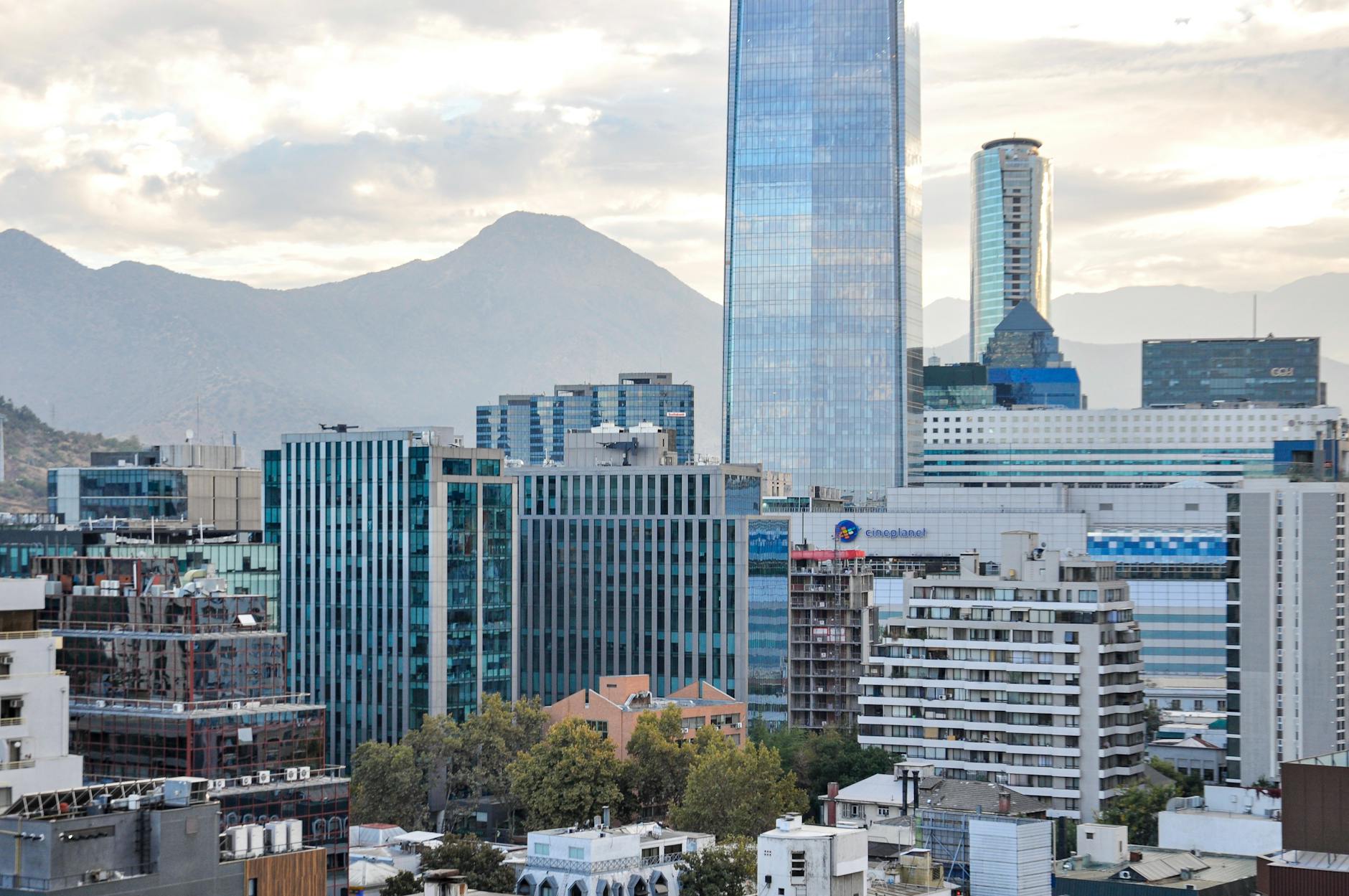
Brazil anchors the market for South American private equity firms, accounting for the majority of regional deal volume, AUM, and sponsor activity. São Paulo functions as the de facto capital of regional PE, hosting local champions Patria Investments, BTG Pactual, and Aqua Capital alongside dedicated LatAm teams from global managers. Mexico ranks as the second-largest market by deal count, with Nexxus Capital ($1.5 billion AUM) and Linzor Capital's northern office operating from Mexico City. The Andean corridor (Chile, Colombia, and Peru) is gaining institutional attention: Santiago serves as Linzor Capital Partners' headquarters, Bogotá is home to ALTRA Investments, and Lima produced the Auna healthcare IPO on the NYSE in 2024. Argentina offers low entry valuations but carries currency devaluation and political volatility that most institutional fund managers treat with caution.
The universe of active general partners (GPs) spans four distinct tiers. Global platforms, including Advent International, General Atlantic, L Catterton, Actis, and Brookfield, operate dedicated LatAm teams within their global fund structures. Regional champions such as Patria Investments, Vinci Partners, and BTG Pactual offer multi-asset platforms with deep origination networks and local regulatory fluency. Sector specialists provide concentrated exposure: Aqua Capital in agribusiness, IG4 Capital in special situations, Riverwood Capital in technology growth equity. Emerging managers and venture capital firms, including Kaszek Ventures, Bicycle Capital, and ALTRA Investments, address earlier-stage and country-specific investment opportunities.
Currency volatility in the Brazilian real, Mexican peso, and Argentine peso creates material foreign exchange risk for USD-denominated funds, compressing net returns when unhedged. Leveraged financing is scarce across most LatAm markets, pushing sponsors toward equity-heavy structures and creative alternatives including mezzanine debt and co-control arrangements. Energy transition infrastructure, nearshore technology services, and corporate carve-outs from multinationals are producing a durable investment pipeline that continues to attract global limited partners (LPs) despite these constraints.
South American PE Firms: Comparison Table
The firms below represent the most active and well-capitalized fund managers deploying capital across South America. AUM figures reflect each firm's most recent public disclosures; for multi-asset platforms, figures may blend fund-level and advisory capital.
| Firm | AUM | Strategy | Sector Strength | Best Known For | HQ |
|---|---|---|---|---|---|
| General Atlantic | $100B+ | Growth Equity | Software, Fintech, Healthcare | Founder-led minority growth stakes | New York |
| Advent International | $92B (global) | Buyout, Growth | Financial Services, Retail, Healthcare | LAPEF series, 30 years in LatAm | Global / São Paulo |
| Brookfield | $61B (South America) | Infrastructure, Real Assets | Energy Transition, Real Assets | Energy transition capital at scale | Toronto / São Paulo |
| Vinci Partners | ~$55-56B | Multi-Asset | PE, Credit, Infra, Real Estate | Regional one-stop alternatives platform | Rio de Janeiro |
| Patria Investments | $40-48B+ | Buyout, Growth, Infra, Credit | Diversified LatAm | 300+ M&A transactions, 30+ year track record | São Paulo |
| L Catterton | ~$37B | Control, Significant Minority | Consumer Brands, F&B, Retail | Consumer brand-building and IPO exits | Greenwich, CT |
| Actis | ~$16B (infra) | Infrastructure PE | Energy, Digital Infrastructure | Sustainable infrastructure fund close | London |
| Riverwood Capital | $5.8B | Growth Equity | Enterprise Software, Tech | Americas tech scaling, VTEX IPO exit | Menlo Park |
| BTG Pactual PE | ~$4.5B PE / $9.4B alternatives | Buyout, Growth, Infra | Brazil and LatAm Diversified | Banking DNA, complex carve-out structuring | São Paulo |
| Kaszek Ventures | $3B+ | Venture Capital | Tech Startups | Nubank, Kavak, QuintoAndar | Buenos Aires / São Paulo |
| Gávea Investimentos | $4B | Alternatives | Brazil Diversified | Brazil macro and private markets expertise | Rio de Janeiro |
| Aqua Capital | $1.1B+ | Sector-Specialist PE | Agribusiness, Food Supply Chains | Agribusiness consolidation, DFI LP base | São Paulo |
| Victoria Capital Partners | $1.5B deployed | Control, Co-Control | South America Diversified | Andean and Southern Cone focus since 1995 | São Paulo / Buenos Aires |
| Linzor Capital Partners | $1.2B invested | Growth, Buyout | Middle Market Diversified | ESG leadership, Andean mid-market | Santiago |
| LAP Latin American Partners | $713M | Growth, Mezzanine, Infra | Infrastructure, Natural Resources | 12-country infra debt and equity | Washington D.C. |
| IG4 Capital | ~$500M | Special Situations | Water, Sanitation, Industrials | Complex turnarounds, governance resets | Brazil |
The table reflects a bifurcated market. Global platforms managing $37 billion and above coexist with specialized mid-market GPs operating $500 million to $5.8 billion mandates. The mid-market tier (Riverwood, BTG Pactual, Linzor, and Victoria Capital) often generates the most attractive risk-adjusted entry multiples, while large-cap platforms deliver scale, LP name recognition, and exit channel diversity.
Top Picks by Investment Strategy
Largest Regional Platform: Patria Investments manages $40-48 billion across PE, infrastructure, credit, and real estate. Patria has executed more than 300 M&A transactions over 30-plus years, backing 45-plus investment platforms with 27 active portfolio companies. No purely regional GP approaches this scale.
Growth Equity Leader: General Atlantic brings $100 billion-plus in global AUM and a dedicated LatAm team. The firm deploys minority growth equity in Brazilian software, fintech, and healthcare, consistently backing category-defining businesses.
Infrastructure Capital Provider: Brookfield Asset Management closed a $20 billion Global Energy Transition Fund II in 2025 and manages $61 billion in AUM tied to South American strategies. This makes it the largest infrastructure capital deployer in the region by a wide margin.
Strongest Mid-Market Tech Track Record: Riverwood Capital manages $5.8 billion in AUM and closed a $1.8 billion fund in late 2023. The firm backs enterprise software, vertical SaaS, and nearshore IT with $25 million to $250 million-plus checks. The VTEX NYSE IPO exit stands as one of LatAm tech's landmark realizations.
Top Consumer Investor: L Catterton deploys approximately $37 billion in global AUM with a dedicated LatAm practice across branded consumer, food and beverage, beauty, and fitness. The Espaço Laser IPO exit demonstrated the firm's ability to build and publicly exit a consumer category leader.
Most Active Special Situations Firm: IG4 Capital pursues complex governance resets and operational turnarounds that most buyout sponsors decline to engage. Reuters reported in August 2025 that IG4 obtained exclusivity on Novonor debt as a path to control Braskem, the defining LatAm special situations move of this cycle.
Leading Agribusiness Specialist: Aqua Capital manages $1.1 billion-plus in AUM focused exclusively on agribusiness and food supply chains. A development finance institution (DFI) serves as an LP in Fund III, providing governance validation that institutional LPs with ESG screening requirements increasingly require.
Dominant LatAm Venture Capital Firm: Kaszek Ventures is the region's largest venture capital firm by committed capital, with more than $3 billion raised and 140-plus portfolio companies including Nubank, QuintoAndar, Kavak, and Bitso.
Top 12 South American Private Equity Firms in Detail
Patria Investments
The benchmark multi-asset platform for Latin American private equity, Patria manages $40-48 billion across PE, infrastructure, credit, and real estate. Patria's operational depth distinguishes it from every regional competitor: 45-plus investment platforms, 27 active portfolio companies, and more than 300 completed M&A transactions over three decades demonstrate a repeatable value-creation machine. The SmartFit and Hidrovias IPOs are landmark exits, showing the firm's ability to build category leaders and access public market liquidity when windows open. The firm also offers recurring co-investment programs for flagship fund LPs, making it a natural starting point for institutional allocators building a core LatAm alternatives position.
Vinci Partners (Vinci Compass)
The Vinci Compass combination created the region's most comprehensive alternatives platform, managing approximately R$304 billion (roughly $55-56 billion) across private equity, credit, real estate, infrastructure, and forestry through an 11-office footprint. The Compass partnership added Andean corridor reach and cross-border LP relationships that most local managers lack. Vinci reported R$12 billion in new capital formation in August 2025, demonstrating healthy LP engagement through a difficult fundraising environment. Founders and corporates seeking structured transactions that cross PE and credit will find Vinci the most sophisticated domestic counterparty for complex deal situations requiring multi-asset flexibility.
Advent International
No global manager has operated longer in Latin American PE than Advent International, present in the region since the mid-1990s and now on the seventh iteration of the LAPEF series. The LAPEF Fund VII received a Fitch 'AA+'/Stable facility rating in July 2025, providing an independent proxy for LP demand quality and banking counterparty confidence rarely available for LatAm-specific vehicles. Advent's control and significant minority buyout strategy spans financial services, healthcare, industrials, and retail. Exits including the sale of Neoris in Mexico and Grupo Big to Carrefour in Brazil illustrate the cross-border execution capability Advent brings to large-cap transactions exceeding what most regional sponsors can absorb alone.
General Atlantic
The growth equity standard for LatAm tech and consumer businesses, General Atlantic deploys $100 billion-plus in global AUM through a dedicated Latin America team focused on non-control and significant minority stakes. Its investment thesis centers on backing category-defining companies in software, fintech, healthcare, and consumer, then professionalizing go-to-market, governance, and M&A readiness. The 2024 combination with Actis created a platform of approximately $107-108 billion, adding sustainable infrastructure alongside the core growth equity mandate. Software founders with $20 million-plus in annual recurring revenue and primary markets in Brazil or Mexico should prioritize General Atlantic as a growth capital partner with genuine cross-border expansion support.
Actis
Carved out of CDC Group and now part of the General Atlantic platform, Actis manages approximately $16 billion in sustainable infrastructure and focuses on energy, digital infrastructure, and long-life assets across Latin America. The May 2025 close of the Long Life Infrastructure Fund II at $1.7 billion reinforced institutional appetite for brownfield infrastructure in high-growth markets. A September 2025 partnership with Franklin Templeton for private-wealth infrastructure solutions extends Actis's distribution reach beyond traditional institutional LP channels. Actis is a natural co-investor and eventual exit buyer for buyout teams building infrastructure-adjacent platforms across South America (data centers, distributed generation, fiber networks).
Brookfield Asset Management
Brookfield's South American presence is defined by scale. The firm manages $61 billion in AUM tied to the region and closed a $20 billion Global Energy Transition Fund II in 2025, making it the largest infrastructure capital deployer in LatAm. Portfolio assets including ON*NET Fibra (Chile and Colombia fiber networks) and Contour Global demonstrate a cross-border infrastructure model spanning power, digital connectivity, and real assets. Operating São Paulo and Rio de Janeiro offices alongside its Toronto global headquarters, Brookfield competes for large-ticket transactions where its balance sheet and operating capabilities exceed those of PE-only sponsors. LPs seeking stable yield-generating infrastructure exposure rather than classic buyout risk will find Brookfield's scale and track record the strongest case for an emerging markets allocation.
L Catterton
The global consumer PE specialist applies brand-building and category-management expertise to Latin America's consumer markets, deploying approximately $37 billion in global AUM. L Catterton's LatAm investment thesis follows pricing power, distribution formalization, and consumption trends across branded consumer, food and beverage, retail, beauty, fitness, and pet categories in Brazil, Mexico, and the Southern Cone. The Espaço Laser IPO exit demonstrated the firm's ability to take a founder-led consumer business to public markets. For consumer roll-up founders and family-owned businesses seeking international brand expertise alongside eventual exit access to global strategic buyers, L Catterton's category depth is unmatched among LatAm PE managers.
Riverwood Capital
Riverwood's Silicon Valley headquarters and $5.8 billion in assets under management define a distinctive angle: a technology-native growth equity platform treating Latin America and North America as equally important within a single investment thesis. Checks from $25 million to $250 million-plus target enterprise software, vertical SaaS, payments, and nearshore IT services. These sectors produce global-quality assets at entry multiples well below US equivalents, a persistent structural advantage Riverwood has exploited for multiple fund cycles. The VTEX IPO, co-led with SoftBank, remains the canonical proof of concept for LatAm tech accessing US public markets. The $1.8 billion fund closed in late 2023 retains uncommitted capital for deployment as software penetration deepens across Brazilian and Mexican mid-market companies.
BTG Pactual Private Equity
BTG Pactual's PE franchise holds a structural advantage unavailable to pure-play sponsors. The parent bank's investment banking, credit, and capital markets infrastructure enables origination and structuring for complex carve-outs and public-to-private transactions that other managers cannot fully underwrite. The firm manages approximately $4.5 billion across six PE vehicles and $3 billion across seven infrastructure vehicles, with a broader Global Alternatives platform of $9.4 billion. BTG is regularly a first call in Brazilian asset sale processes, competing alongside and opposite global platforms. International co-investors seeking a locally embedded counterparty for large Brazilian situations should consider BTG the most capable domestic partner with a full capital-structure toolkit.
IG4 Capital
Special situations PE has a clear LatAm champion in IG4 Capital, pursuing control and co-control positions in stressed, under-managed, or governance-challenged assets that most buyout sponsors decline to engage. Managing approximately $500 million across two funds, IG4's portfolio includes Iguá Saneamento, a water and sanitation platform demonstrating the firm's ability to manage public-stakeholder complexity alongside operational turnarounds.
The 2025 exclusivity on Novonor debt, structured as a path to control Braskem (one of Brazil's largest petrochemical companies), is the most complex LatAm transaction in active structuring this cycle. New infrastructure platforms in the Andean region extend the firm's reach beyond Brazil's stressed-asset universe. Institutional LPs seeking returns uncorrelated to market beta should recognize IG4 as the most distinctive special situations specialist in the region.
Aqua Capital
Agribusiness PE in Latin America has one clear specialist: Aqua Capital, managing more than $1.1 billion across control and significant-influence positions in food inputs, processing, logistics, and supply chain formalization. A development finance institution serves as an LP in Fund III, validating governance standards and providing DFI credentials that institutional LPs with ESG screening requirements increasingly require. Operations span Brazil, the Southern Cone, and Mexico. The firm follows supply chain consolidation theses that cross borders, tracking food security and export competitiveness as rising policy priorities across LatAm governments.
The firm provides the cleanest LatAm PE exposure to agribusiness, a sector central to regional GDP. Unlike tech growth equity, agribusiness has avoided the valuation inflation that compresses entry returns for new investors.
Kaszek Ventures
Latin America's largest venture capital firm by committed capital, Kaszek has raised more than $3 billion since its 2011 founding and backed more than 140 startups across the region. Its portfolio represents the most concentrated collection of LatAm unicorns held by any single fund manager: Nubank, WellHub, QuintoAndar, Konfio, Creditas, Kavak, Bitso, and DolarApp.
Unlike growth equity firms writing $25 million-plus checks, Kaszek engages at Series A and beyond, providing founders access to one of the region's most valuable networks and cross-border expansion capabilities. Early-stage tech founders across Brazil, Mexico, Colombia, and Argentina treat a Kaszek term sheet as validation of regional category leadership.
Investment Trends Shaping Latin American Private Equity
Energy Transition and Infrastructure Capital
Energy transition is the single largest theme drawing fresh capital into South American private markets. Brookfield's $20 billion Global Energy Transition Fund II, closed in 2025, and Actis's $1.7 billion Long Life Infrastructure Fund II, closed in May 2025, together represent more than $21 billion in uncommitted capital. These pools target power generation, distributed energy, fiber networks, and adjacent infrastructure across the region.
Brazil's renewable energy capacity gaps, Colombia's hydropower assets, and Chile's solar corridor provide a multi-decade project pipeline. Infrastructure GPs are competing aggressively to access these opportunities, driving up valuations in the most shovel-ready assets.
Enterprise Software and Vertical SaaS
Brazil and Mexico are producing enterprise software companies at entry multiples 30-50 percent below comparable US firms. Riverwood, General Atlantic, and Advent are among the growth equity managers actively deploying capital in this space.
VTEX's NYSE listing demonstrated that LatAm-born SaaS platforms can reach global capital markets. Indicium's $40 million round in 2024, backed by Columbia Capital, signals AI-enabled data services as an emerging subsector. Nearshore IT and BPO services benefit from time-zone alignment with North America and a growing technology talent pool. This dynamic supports geographic arbitrage platforms that consistently attract exit interest from North American strategics.
Corporate Carve-Outs from Multinationals
Multinationals rationalizing their LatAm operations are creating a wave of carve-out investment opportunities that favor sponsors with local regulatory expertise. Advent's exit of Grupo Big (the former Walmart Brazil business) to Carrefour illustrates the pattern: a global corporation divests a LatAm subsidiary, a PE sponsor professionalizes it, and a strategic acquirer pays a premium for a restructured regional champion. Patria's sale of Highline to DigitalBridge follows the same playbook.
As global companies simplify LatAm footprints in response to currency volatility and geopolitical trade pressure, mid-market buyout firms with carve-out execution capability are positioned to capture the most deal flow through 2026. BTG Pactual, Advent, and Patria stand out as the most active players in this category.
ESG and DFI-Backed Fund Mandates
Development finance institutions are shaping the LP base of LatAm PE in ways that matter to institutional allocators. Development finance institution participation in Aqua Capital's Fund III, alongside $8.3 billion committed across 352 regional transactions industry-wide, signals that DFI involvement serves as both a governance credential and a co-financing catalyst.
Linzor Capital Partners won the ESG Investing Awards in 2025 and participated in the UN Principles for Responsible Investment conference in São Paulo. LAP Latin American Partners is a UN PRI signatory applying IFC Performance Standards across its portfolio. Managers without DFI or UN PRI alignment are finding it harder to close commitments from European and Canadian pension funds. Formal ESG screening requirements have become standard at these institutions.
Exit Innovation: Trade Sales, Continuations, and the IPO Gap
More than 90 percent of Brazil's PE exits since 2021 have been trade sales. IPOs have been effectively unavailable since the last Brazilian PE-backed listing that year.
Peru's Auna and Mexico's Tiendas 3B listed on the NYSE in 2024 as cross-listed exceptions. Both required US exchange access rather than domestic market depth. Secondary buyouts represent approximately 20 percent of Brazilian M&A exits since 2022. The limited number of active sponsors constrains competitive tension in sponsor-to-sponsor processes. Continuation funds are gaining traction for sponsors in healthcare, renewables, and infrastructure. They allow holding periods to extend without forcing premature trade sales at compressed valuations.
How to Evaluate South American PE Firms
Track record quality is the primary screen, and in LatAm it means realized returns, not paper marks. A fund manager's buyer relationships (domestic conglomerates, global strategics, and regional champions) determine exit quality more than market conditions. More than 90 percent of regional exits occur through trade sales, making these networks a critical due diligence focus. Ask specifically about the proportion of capital returned across prior fund vintages versus capital still marked to cost or market.
Local office presence matters disproportionately in this market. Firms managing LatAm investments remotely from New York or Miami lack the stakeholder fluency and regulatory relationships that translate into execution advantages. Deal sourcing density also suffers without a physical presence in the market. Confirm that senior deal leaders are physically based in São Paulo, Mexico City, Santiago, or Bogotá. Spanish and Portuguese-speaking senior partners are a necessary condition, not a differentiator.
DFI participation from multilateral development banks provides independent validation of environmental and social risk management. For institutional allocators with ESG screening requirements, it serves as a reliable governance signal. Overreliance on a single country (particularly Argentina or Venezuela) is a structural red flag, as is an exit strategy dependent on IPO windows that have not opened in Brazil since 2021.
Verify AUM figures carefully: several managers blend fund-level AUM with advisory assets, significantly inflating the headline number. Fund series continuity is a useful proxy for LP retention. Managers on Fund VI or VII, like Advent on LAPEF VII, have demonstrated they can return capital and re-raise. That track record is the most direct evidence of institutional quality.
Which Firm Fits Your Needs?
Founders seeking growth capital between $20 million and $100 million in Brazil or Mexico should prioritize General Atlantic and Riverwood Capital. Both write minority and growth equity checks with dedicated LatAm teams. They differ in sector concentration: Riverwood is enterprise software-native, while General Atlantic covers fintech, healthcare, and consumer alongside software. Founders in agribusiness supply chains seeking strategic capital alongside deep operational expertise should engage Aqua Capital. The firm's food supply-chain consolidation playbook is sector-specific in ways no generalist sponsor can replicate.
Institutional LPs building alternatives portfolios with LatAm exposure face a different decision matrix. A core allocation to a multi-asset regional champion provides diversified exposure with fee-earning stability across market cycles. Patria suits LPs prioritizing multi-strategy breadth; Vinci Partners suits those seeking combined Brazilian and Andean footprint coverage. LPs seeking infrastructure-specific yield should weight Brookfield and Actis. Both deploy at scale into energy transition and digital infrastructure, with return profiles distinct from classic buyout PE.
Business owners and family-held companies in consumer goods, food and beverage, or retail across Brazil, Mexico, or the Southern Cone should treat L Catterton as a first call. The firm's $37 billion in managed capital funds a brand-building and international distribution playbook that regional sponsors cannot replicate. Corporate development teams evaluating LatAm asset sales should note that BTG Pactual and Patria are most frequently counterparties in Brazil's largest corporate transactions. Understanding their portfolio construction and co-investment programs helps map likely competitive dynamics and probable buyer universe in any structured sale process.
Methodology
This guide to private equity in South America covers fund managers selected based on disclosed assets under management, publicly available fund close announcements, and deal activity reported through industry publications. Fund facility ratings through 2025 are also referenced. Firm data reflects the most recent available public disclosures. AUM figures for multi-strategy platforms may blend fund-level and advisory capital where firms report on a combined basis.
The comparison table sorts by most recent disclosed AUM, largest first, with editorial judgment applied to the strategic picks section. Regional coverage encompasses Brazil, Mexico, Chile, Colombia, Peru, and Argentina as the six primary countries receiving active institutional PE capital. The Andean corridor is treated as a distinct sub-market for infrastructure and mid-market growth strategies.
Frequently Asked Questions
Written by
Andre Miller
Business Analyst
Andre Miller is a Business Analyst at ZoomInvestors, covering private equity and venture capital firms across geographies and sectors. His work focuses on deal structures, investor criteria, and the market trends that shape institutional capital flows.
Related Topics
Explore More
Read more articles on our blog