Private Equity Kuwait: Top Firms in 2026
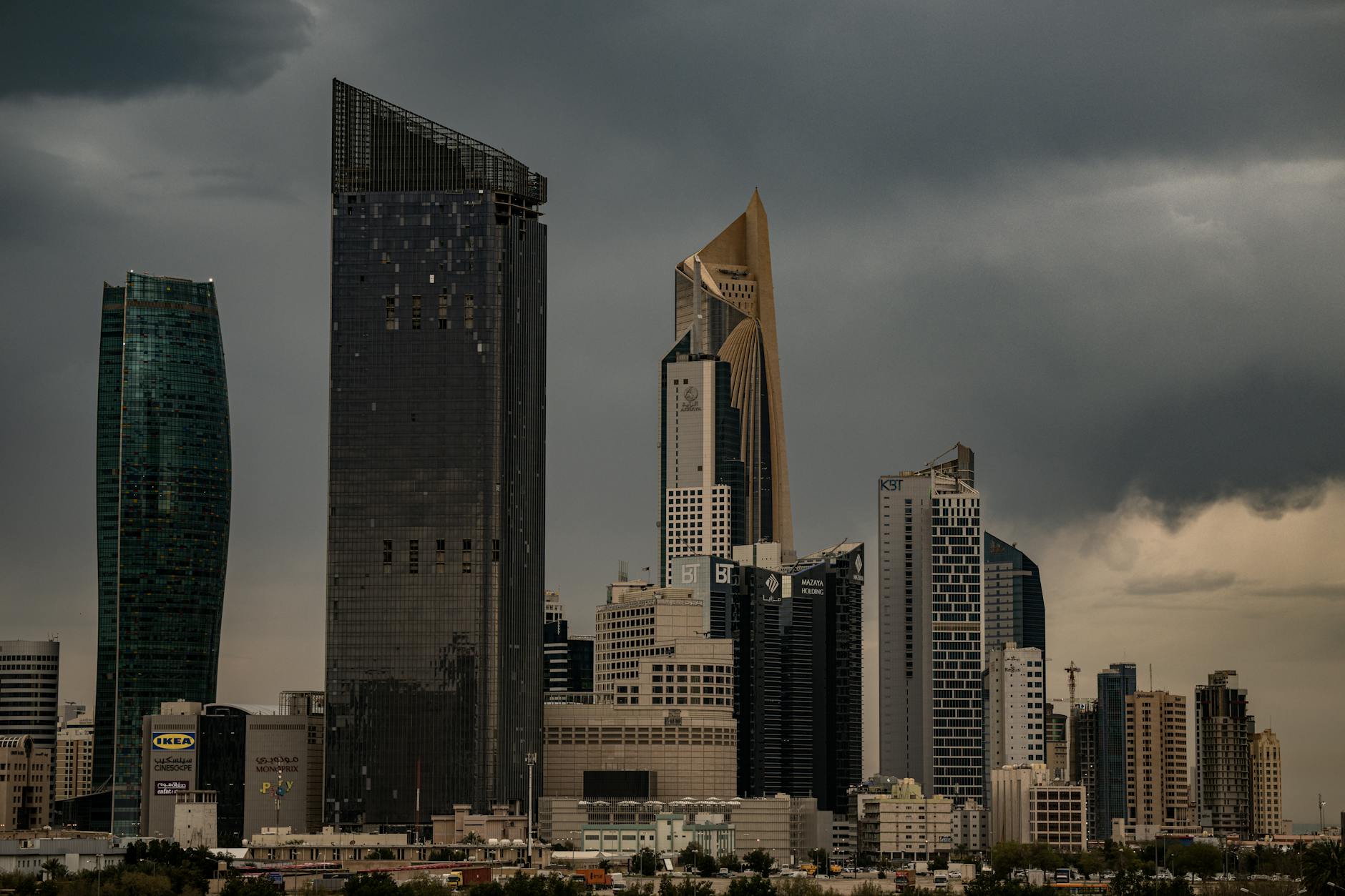
Key Facts About Kuwait's PE Market
- Kuwait hosts 36 active private equity and venture capital firms as of January 2026, deploying more than $37.6 billion across 821 investment rounds in over 130 companies.
- The Kuwait Investment Authority (KIA) manages approximately $1 trillion in assets, making it one of the world's largest sovereign wealth funds and the defining anchor of the local PE ecosystem.
- Kuwait's $137 billion pension fund, PIFSS (Public Institution for Social Security), resumed private equity commitments in late 2025 after a three-year pause triggered by internal governance reforms.
- Over the past five years, Kuwait-based funds participated in 62 seed-stage rounds totaling $140 million, 79 early-stage rounds totaling $3.15 billion, and 74 late-stage rounds totaling $7.31 billion.
- The Carlyle Group plans to open a Kuwait City office in 2026, and BlackRock established Kuwait operations in 2025, reflecting accelerating international appetite for Gulf capital relationships.
- Islamic finance structures, including Sharia-compliant equity vehicles, sukuk, and murabaha instruments, are standard features of the Kuwait investment landscape, not niche options.
- KIA has made 54 or more known fund commitments globally, with its most recent including Hg Genesis 11 in November 2025.
Private Equity in Kuwait: Market Overview
The private equity Kuwait ecosystem operates on three distinct layers. At the top sit KIA and PIFSS, two of the largest institutional limited partners (LPs) on earth, deploying capital into global buyout funds rather than operating as traditional general partners (GPs). Below them, a cohort of domestically active GPs (Kamco Invest, Wafra International, KFH Capital, NBK Capital Partners, and Global Investment House) provides the deal-making engine for GCC and MENA transactions. At the base, a growing venture capital layer targets GCC technology and fintech startups at seed and Series A stages.
Kuwait City is the singular hub for all 36 tracked firms. Deal flow extends across the Gulf Cooperation Council, broader MENA, Turkey, and in some cases into South Asia and the Far East. KIA's mandate is fully global, with strategic positions across the Americas, Europe, Asia-Pacific, and Emerging Markets. The domestic GP community targets primarily GCC, with selective MENA and international exposure through specific fund vehicles.
The market faces tangible headwinds: a slow global exit environment, regulatory complexity under the Capital Markets Authority of Kuwait, and a limited IPO pipeline on Boursa Kuwait. PIFSS's return to PE commitments, the entry of Carlyle and BlackRock, Kuwait's oil diversification agenda, and a fast-growing fintech and healthcare sector all support renewed capital activity. Islamic finance is structural rather than supplementary, with several major fund managers operating exclusively within Sharia-compliant frameworks.
Firm Comparison at a Glance
The firms below represent the breadth of Kuwait's PE and VC market, from trillion-dollar sovereign investors to sub-$50 million seed funds.
| Firm | AUM | Strategy | Sector Strength | Best Known For | HQ |
|---|---|---|---|---|---|
| Kuwait Investment Authority (KIA) | ~$1T | Fund of Funds / Diversified | Global diversified | 54+ global fund commitments | Kuwait City |
| PIFSS | $137B | Buyout | Global buyout funds | Re-entry into PE after 2022 pause | Kuwait City |
| NBK Capital Partners | $1.1B | Growth Equity | Healthcare, education, logistics | $663M+ in gross distributions, 18 exits | Kuwait City |
| KIPCO | N/D | Buyout / Diversified | Financial services, food, real estate | 60+ companies across 24 countries | Kuwait City |
| Wafra International | N/D | Growth Equity / Private Debt | GCC diversified | 29 portfolio companies, 5-7yr horizon | Kuwait City |
| Kamco Invest | N/D | Pre-IPO / Buyout | Healthcare, logistics, education | 5 active PE funds, 5 of 6 GCC countries | Kuwait City |
| KFH Capital | N/D | PE / VC / Direct | MENA diversified | Sharia-compliant PE under KFH umbrella | Kuwait City |
| Global Investment House (GIH) | N/D | Buyout | Financial services, logistics | JTC controlling stake acquisition | Kuwait City |
| Agility | N/D | Diversified | Consumer, enterprise apps | 21 portfolio companies globally | Kuwait City |
| Arzan Venture Capital | N/D | Venture Capital | Fintech, digital, gaming | Seed/Series A with global reach | Kuwait City |
NBK Capital Partners is the only independent mid-market GP with publicly disclosed AUM and distribution track record, making it the benchmark for evaluating domestic PE performance. Firms listed as N/D for AUM either operate through undisclosed fund structures or have not made aggregate figures public.
Top Picks by Investment Strategy
Largest Institutional LP: Kuwait Investment Authority manages approximately $1 trillion across the General Reserve Fund and Future Generations Fund. KIA is the world's oldest sovereign wealth fund and a capital allocator whose fund commitments move markets. Its 54-plus known global fund commitments make it the most consequential LP operating out of Kuwait.
Strongest Domestic GP Track Record: NBK Capital Partners has deployed $1.1 billion in aggregate committed capital, completed over 35 investments, and distributed more than $663 million in gross returns across 18 exits. Its verified record is the most transparent mid-market GP performance data available in Kuwait. The $310 million Fund II targets healthcare, education, and logistics across the Middle East and Turkey.
GCC Growth Equity Leader: Wafra International targets unconventional capital structures combining private debt and private equity in GCC companies. Its disciplined 5-7 year investment horizon and 29 active portfolio companies span Egypt, Qatar, and Kuwait.
Pre-IPO Specialist: Kamco Invest is the only Kuwait-based GP running a dedicated suite of pre-IPO and buyout vehicles simultaneously. Investments span five of the six GCC countries, with a buyout fund extending into Turkey and North Africa.
Most Active Conglomerate Acquirer: KIPCO holds stakes in over 60 companies across 24 countries in financial services, food, petrochemicals, and media. Its buy-and-build model has few equivalents in the Gulf.
Top GCC VC Firm: Arzan Venture Capital seeds digital, fintech, and gaming companies at seed and Series A, with deal flow extending beyond MENA into North America and Europe. This gives it the broadest geographic reach of any Kuwait-domiciled VC firm.
Sharia-Compliant Real Estate Play: Dimah Capital is a dedicated Sharia-compliant international real estate investor backed by Al Imtiaz Investment Group. Its cross-border transactions include a $70 million student housing acquisition in Canterbury, UK.
Top Kuwait PE & VC Firms in Detail
Kuwait Investment Authority (KIA)
The world's oldest sovereign wealth fund, KIA was established in 1953 and redefined in 1982 as Kuwait's primary vehicle for converting oil revenue into generational wealth. Its approximately $1 trillion in assets spans the General Reserve Fund and the Future Generations Fund, with a mandate explicitly designed to reduce Kuwait's reliance on hydrocarbon income. KIA operates primarily as an LP, channeling capital into external fund managers globally rather than sourcing deals directly.
Its over 54 known fund commitments include Hg Genesis 11 (November 2025) and the Capital Constellation partnership with AP3. KIA's head publicly described the PE sector as "very troubled" in reference to continuation vehicles and delayed LP distributions. That statement signals stronger scrutiny on new commitments, despite the fund's continued deployment pace.
Public Institution for Social Security (PIFSS)
PIFSS carries more significance for global PE fundraising than its profile might suggest. Kuwait's $137 billion state pension fund halted new PE commitments in October 2022 during a leadership overhaul, creating a three-year gap in its capital flows to global buyout funds. Its return in October 2025 was treated as a market signal by an industry grappling with a fundraising slump.
PIFSS now re-enters under stricter per-fund exposure limits, in conversations with multiple leading buyout firms. Its board member Ahmad Al-Bader represents PIFSS on the North Africa Holding Company board and serves on advisory committees of several global PE funds, making PIFSS a relationship LP rather than a passive allocator.
NBK Capital Partners
The clearest benchmark for mid-market PE performance in Kuwait, NBK Capital Partners has deployed $1.1 billion in aggregate committed capital and completed over 35 investments since inception. Its gross distributions exceed $663 million across 18 exits, a verified track record that most Gulf-based GPs cannot match with public data. The $310 million NBK Capital Equity Partners Fund II targets growth capital for mid-sized companies across the Middle East, Turkey, and North Africa, focusing on healthcare, education, consumer staples, logistics, and technology.
Founders in these sectors with businesses scaled across multiple GCC markets are the firm's primary GP counterparties. NBK's affiliation with the National Bank of Kuwait provides institutional credibility and deal sourcing depth that independent managers typically lack at this fund size.
Wafra International Investment Company
Wafra's private equity department, established in 2020, targets companies in the MENA region with a deliberate focus on capital structures that mainstream buyout funds often avoid. The firm actively pursues private debt alongside equity, seeking stable cash flows with clear exit timelines rather than relying solely on control-oriented acquisitions. Its 29 portfolio companies include Pioneers Holding in Egypt, Sanam Real Estate, Afaq Educational Company, and Salam Bvonian Development in Qatar.
For GCC companies seeking growth capital with unconventional structures, Wafra is among the most flexible domestic options. The 5-7 year investment horizon is standard for the strategy, with exit typically via trade sale or secondary transaction.
Kamco Invest
Kamco manages five distinct PE vehicles simultaneously, making it the most structurally diversified Kuwait-based GP. Its flagship Kamco Opportunistic Fund I, invested across five of the six GCC countries in healthcare, education, financial services, manufacturing, and logistics, generated distributions in each year from 2006 to 2015 (except 2014). Kamco Opportunistic Fund II extends the pre-IPO mandate to early-stage listings driven by demographics and per-capita income growth.
The Global Buyout Fund targets MENA and Turkey with a buy-and-build mandate. GMFA, established in 2008, covers mid-market growth equity in MENA including Far East and South Asia. The Kuwait Private Equity Opportunities Fund (KPEOF), the oldest vehicle at 2004 inception, focuses on unlisted Kuwaiti companies targeting control or co-investment exits via listing or trade sale.
KFH Capital
KFH Capital operates at the intersection of Islamic finance and private markets. The firm is the investment banking and capital markets arm of Kuwait Finance House, one of the world's largest Islamic banks, and brings institutional credibility and a Sharia-compliant framework to every transaction across private equity, direct investment, and venture capital in the MENA region.
LPs or founders who require Islamic finance structuring as a firm mandate, not just a preference, have very few Kuwait-domiciled GPs to choose from at this scale. KFH Capital is one of them, with institutional certification and access to KFH's global network of affiliates and portfolio companies that most independent managers cannot replicate. Specific fund sizes and AUM are not publicly disclosed.
KIPCO (Kuwait Projects Company Holding)
KIPCO's investment model is acquisition-oriented at scale, with stakes in over 60 companies across 24 countries spanning financial services, food, petrochemicals, media, real estate, and education. The holding company structure differs from a closed-end PE fund. KIPCO owns, operates, and sells businesses over a longer cycle than the typical 5-7 year fund horizon.
Its recent UGH acquisition of a 49% stake in Al Rawabi Holding illustrates the conglomerate deal profile. For business owners in the GCC seeking a strategic acquirer with regional operating expertise and a long-term ownership orientation, KIPCO represents a category distinct from financial sponsor PE.
Global Investment House (GIH)
GIH focuses on the mid-market in financial services, real estate, and logistics, primarily in the Middle East and Africa. Its acquisition of a controlling stake in Jassim Transport & Stevedoring Company (JTC) is the clearest public reference point for its buyout strategy. The firm operates at Series B and buyout stages with investment sizes in the $10-50 million range, positioning it between the institutional LP tier and the early-stage VC ecosystem.
GIH's focus on logistics assets in the Gulf is well-timed given regional infrastructure spending under national diversification programs across GCC governments.
Agility
Agility's investment arm holds 21 portfolio companies spanning consumer goods, enterprise applications, and technology in markets including India and the United States. The Kuwait-based conglomerate, established in 1979, has evolved from its logistics heritage into a diversified corporate investor with acquisition and venture-stage mandates. Unlike the fund-of-funds or LP-oriented institutions that dominate Kuwait's upper tier, Agility deploys corporate capital directly into businesses it can integrate with or scale through its operating network. Its international portfolio breadth distinguishes it from most Kuwait-headquartered PE vehicles.
Arzan Venture Capital
The strongest dedicated VC firm in Kuwait's ecosystem, Arzan operates at seed and Series A across digital, fintech, gaming, and mobile apps. Its geographic investment scope extends to North America and Europe, making it one of the few Kuwait-based VCs with a true cross-border mandate rather than a GCC-only focus. The firm participates in early-stage rounds in the $0-1 million investment size category, targeting pre-traction and early-traction stages where GCC founders have historically struggled to access institutional capital.
GCC tech founders building across the Gulf who need a locally networked investor with international deal exposure should consider Arzan as a first-call seed partner.
Investment Trends and Capital Flows
Institutional Re-Engagement
PIFSS's October 2025 decision to resume PE commitments is the single most consequential near-term capital flow event in Kuwait's PE market. The fund's re-entry under stricter per-fund exposure limits, following in-depth discussions with leading buyout firms, injects potential billions into a global fundraising environment under sustained pressure. KIA's Hg Genesis 11 commitment in November 2025 confirms the sovereign wealth fund has not pulled back from global PE despite its public criticisms of continuation vehicles.
International Firms Entering Kuwait
Carlyle's plan to open a Kuwait office in 2026 and BlackRock's establishment of local operations in 2025 are not coincidental. Both firms are positioning to capture allocations from PIFSS, KIA, and Kuwait's family office community as these investors become more active. Goldman Sachs, Franklin Templeton, and State Street are also exploring expansion in the market. The entry of four to five global asset managers within a 12-18 month window validates Kuwait's standing as a capital source worth building a local footprint to access.
Technology and Fintech Growth
Seed and early-stage capital deployment in Kuwait has accelerated noticeably, with $3.15 billion deployed across 79 early-stage rounds over the past five years. Fintech, SaaS, and mobile applications are attracting the highest density of deal activity, with Arzan Venture Capital, Faith Capital, and Al Dhow Capital all running active seed programs. The shift reflects both a younger Kuwaiti demographic with digital-first business preferences and a GCC-wide regulatory push toward financial services digitization.
Oil Diversification and Non-Oil Sectors
Kuwait's government reform agenda under New Kuwait 2035 is directing private capital toward healthcare, education, logistics, and energy transition. Kamco's Opportunistic Funds have targeted these exact sectors since 2015, and NBK Capital Partners' growth equity mandate aligns directly with the healthcare and education sectors targeted by the diversification program. Reduced single-sector concentration is a structural goal, making PE a policy-aligned asset class in Kuwait for the first time in a sustained way.
ESG and Sharia-Compliant Structures
ESG integration is no longer a differentiator in Kuwait's PE market; it is becoming a baseline expectation. Younger Kuwaiti institutional investors and family offices are applying environmental and social criteria to fund manager selection, and the government has introduced tax incentives for sustainable businesses that reinforce the trend. Islamic finance structures remain standard for a significant portion of the market, with sukuk financing, murabaha structures, and Sharia-compliant equity vehicles offered by KFH Capital, Al Imtiaz, and Dimah Capital, among others.
How to Evaluate PE Investors in This Market
Track record verification is the starting point, and in Kuwait it requires specific attention to distribution history, not just reported gross returns. NBK Capital Partners' $663 million-plus in gross distributions across 18 exits is an example of a verifiable, quantified record. Ask any GP candidate for annual distribution schedules over the fund's life, not a single headline internal rate of return (IRR) figure.
Sector expertise and geographic scope alignment matter more in Kuwait than in deeper markets. A generalist mandate works well for KIPCO and KFH Capital because their institutional networks compensate for thinner domestic deal flow. Specialists like Kamco Invest for pre-IPO and Arzan for VC outperform in their niches precisely because deal origination in Kuwait's thin market rewards relationships. Match the GP's dominant geography (GCC-only, MENA, or global) to your own portfolio's expansion stage.
Governance history deserves scrutiny. PIFSS's three-year investment pause is a cautionary signal: even a $137 billion institution can lose three years of deployment due to internal leadership disruptions. Review whether the GP has experienced significant management turnover, regulatory sanctions from the Capital Markets Authority, or fund governance disputes. Red flags in Kuwait specifically include continuation vehicles that delay LP distributions; KIA's own leadership has publicly criticized this practice. Also watch for overconcentration in a single sector without a clear diversification pathway. For LPs assessing fees, a carried interest of 20% and management fee of 1.5-2% are standard. Negotiate co-investment rights and LP advisory committee access upfront.
Which Firm Fits Your Needs?
Founders scaling a healthcare, education, or logistics business across the GCC and seeking structured growth capital should prioritize NBK Capital Partners and Wafra International. NBK's $310 million fund targets precisely this mid-market segment with a proven distribution track record, while Wafra offers private debt structures for founders who want capital without full equity dilution. KFH Capital adds a Sharia-compliant option for the same founder profile where religious finance constraints apply.
Early-stage founders in technology and fintech have three primary options in Kuwait: Arzan Venture Capital for its geographic breadth and active seed pipeline, Faith Capital for IT, SaaS, and IoT plays at seed and Series A, and Al Dhow Capital for biotechnology and mobile applications at sub-$1 million initial checks. All three operate from Kuwait City with GCC-wide mandates. Arzan has the broadest reach beyond the Gulf, which matters for founders targeting cross-border scale.
LPs seeking Kuwait-domiciled MENA exposure with Islamic finance options should evaluate Kamco Invest's pre-IPO and buyout fund suite, which covers five of the six GCC countries and includes Sharia-compliant vehicle options. Al Imtiaz Investment Group, with KD 113 million in paid-up capital and a Sharia-compliant mandate covering public equities, IPOs, sukuks, and private offerings, suits LPs who require certified Islamic structures rather than ad-hoc accommodation. Business owners in logistics, financial services, or consumer goods exploring buyout exit options should engage with GIH and KIPCO, both of which actively acquire controlling stakes in GCC mid-market companies. GIH's JTC transaction is a recent reference for the deal profile.
Methodology
This guide to private equity in Kuwait covers 36 active PE and VC firms tracked as of January 2026, drawing on fund databases, regulatory disclosures, official fund websites, and credible financial media. AUM and deal figures come from public disclosures and firm communications where available; firms without disclosed figures appear as N/D rather than estimated. Firm selection required an active PE or VC mandate with Kuwait headquarters or primary Kuwait operations and verifiable investment activity. Rankings and editorial picks reflect market significance, track record transparency, and strategic relevance rather than a formal league table methodology. The Kuwait private equity market covered here reflects conditions as of Q1 2026, and fund statuses, AUM figures, and firm details are subject to change as new transactions close and fund cycles progress.
Frequently Asked Questions
Written by
Jodie White
Private Markets Researcher
Jodie White researches private equity and venture capital firms across sectors, tracking investment focus, platform activity, and market positioning for ZoomInvestors.
Related Topics
Explore More
Read more articles on our blog