Private Equity Hawaii: Top Firms in 2026
Key Facts About Hawaii's Private Equity Market
- Approximately 20 active private equity and venture capital firms operate in Hawaii, with virtually all headquartered in Honolulu on Oahu.
- Hawaii's Employees' Retirement System committed up to $1 billion to private equity allocations in FY2025, the largest institutional capital signal the local market has received.
- Jupiter Group reports over $1 billion in principal and advisory transactions since founding, placing it among the most active dealmakers in the state.
- Hawaii Angels has deployed more than $70 million into early-stage startups since 2002, forming the backbone of the island's seed-stage ecosystem.
- The PE workforce share in Hawaii grew 11.4% from 2018 to 2022, with private equity-controlled companies employing approximately 44,000 workers, representing 9.1% of the private sector workforce.
- Dominant strategies include real estate private equity, middle-market buyout, and early-stage venture capital, reflecting Hawaii's tourism-driven economy and expanding technology startup scene.
- The HTDC HI-CAP program channels federal SSBCI capital into venture capital funds targeting agtech, clean energy, artificial intelligence, and ocean technology.
Private Equity Hawaii: Market Overview
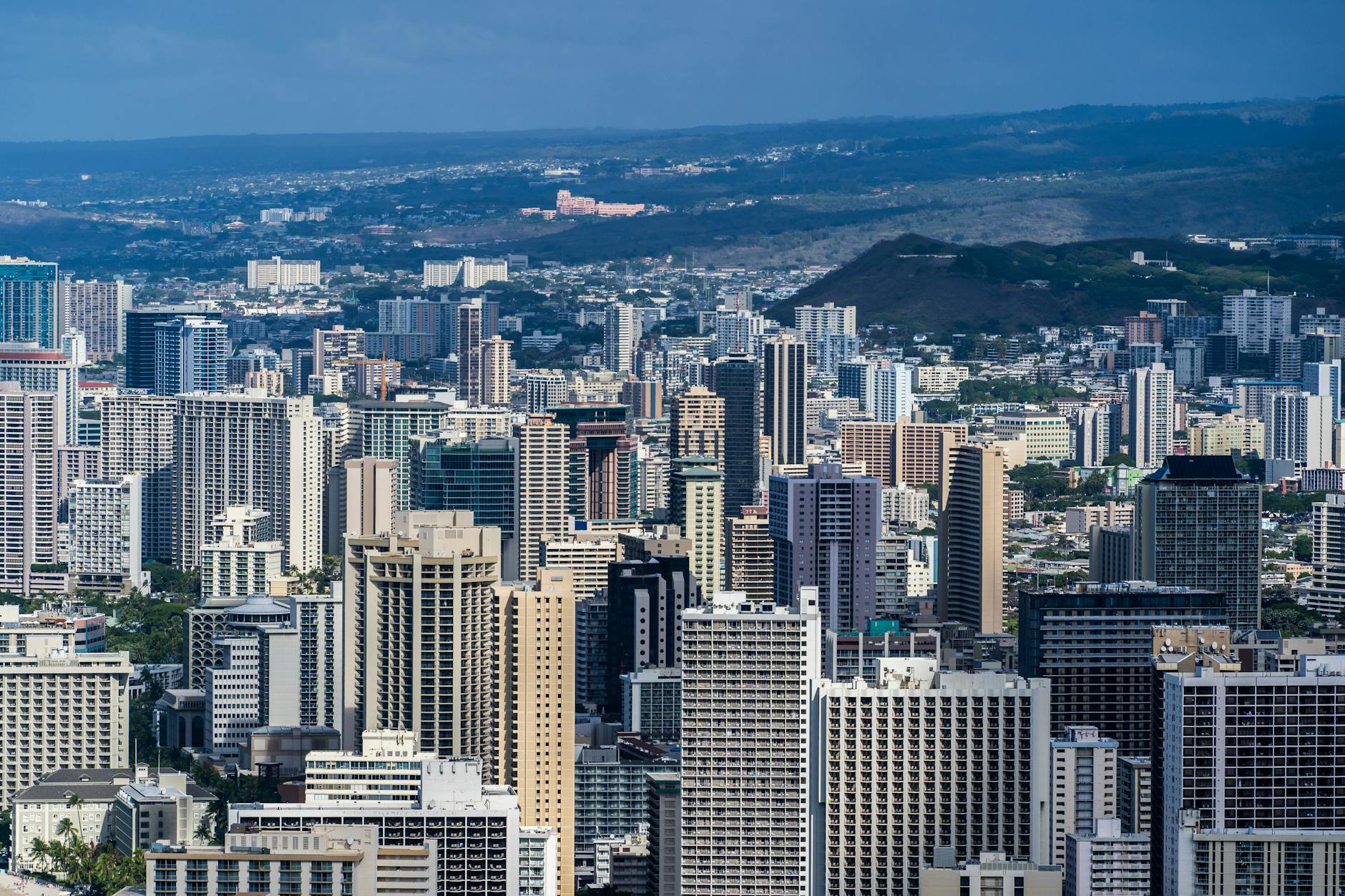
Hawaii's private equity market is small by national standards but institutionally maturing, with approximately 20 active firms concentrated almost entirely in Honolulu. The state's island geography creates natural barriers to entry that favor local operators with community relationships and deep sector knowledge. Mainland fund managers rarely develop the deal sourcing networks needed to compete against firms with decades of on-the-ground presence.
The tourism-driven economy shapes the investment thesis for nearly every Hawaii PE firm. Hospitality and real estate generate the largest deal opportunities, which means returns correlate with travel industry cycles in ways that mainland buyout strategies do not. Logistics, insurance, and IT services round out the middle-market opportunity set, serving the practical infrastructure needs of an import-dependent island economy.
Hawaii's position as an Asia-Pacific gateway creates cross-border deal flow that no mainland market can replicate. Jupiter Group has executed transactions in South Korea, China, Indonesia, India, and Thailand, while Servco Pacific Capital has expanded into Australia. The Hawaii Venture Capital Association (HVCA), Hawaii Angels, and the HTDC HI-CAP program collectively support deal flow from seed stage through growth equity, giving the market infrastructure that punches above its size.
Firm Comparison at a Glance
Most Hawaii-based PE and venture capital firms do not publicly disclose assets under management (AUM). The table below uses "Undisclosed" where specific figures are unavailable, with one exception: Hawaii Angels has publicly reported over $70 million deployed since 2002.
| Firm | AUM | Strategy | Sector Strength | Best Known For | HQ |
|---|---|---|---|---|---|
| Tradewind Capital Group | Undisclosed | Buyout / Growth Equity | Insurance, Logistics, IT, Dental | Permanent capital model | Honolulu |
| BlackSand Capital | Undisclosed | Real Estate PE | Hospitality, Residential | Royal Lahaina Resort acquisition | Honolulu |
| Jupiter Group / PacifiCap | Undisclosed | Special Situations / Growth Equity | Hospitality, Tech, Renewables | $4.1B Rayzebio exit | Honolulu |
| Servco Pacific Capital | Undisclosed | Growth Equity / Venture | Automotive, Consumer Tech, Musical Instruments | Majority stake in Fender | Honolulu |
| Koa Capital Partners | Undisclosed | Buyout / Growth Equity | Consumer, Technology, Energy | Maui Brewing Co. investment | Honolulu |
| Sultan Ventures | Undisclosed | Venture Capital | Technology Startups | XLR8UH accelerator (Forbes top 30) | Honolulu |
| Hawaii Angels | $70M+ total | Angel / Seed | All Sectors | 500+ decks reviewed annually | Honolulu |
| Terra Massa Capital | Undisclosed | Real Estate PE | Residential, Commercial, Hospitality | High-barrier-market focus | Honolulu |
| Akamai Capital | Undisclosed | Community Dev VC | Disadvantaged Communities, Pan-Asia Equity | CDVC and social impact mandate | Kailua |
| Mid-Pacific Equities | Undisclosed | Buyout / Operations | Business Services | Active operational model | Honolulu |
The table confirms a market dominated by real estate PE and middle-market buyout strategies, with early-stage venture capital increasingly formalized through accelerator and co-investment programs. No single firm discloses fund size publicly, which makes direct AUM comparisons with mainland peers impossible.
Top Picks by Investment Strategy
Hawaii's PE and venture capital ecosystem spans eight distinct strategy categories. These editorial picks identify the strongest option in each, based on deal track record, portfolio depth, and market positioning.
- Longest Track Record: Tradewind Capital Group has operated since 1993 using a permanent capital model, holding the deepest bench of local Hawaii operating companies across insurance, freight, IT services, dental, and distribution.
- Real Estate PE Leader: BlackSand Capital is the only Hawaii-focused real estate private equity firm operating globally, with landmark hospitality acquisitions including Royal Lahaina Resort, Waikiki Galleria Tower, and Kaimana Beach Hotel.
- Largest Single Deal Maker: Jupiter Group / PacifiCap has executed over $1 billion in transactions, and its $4.1 billion exit via the Rayzebio sale to Bristol Myers Squibb demonstrates institutional-scale capability from a Honolulu base.
- Growth Capital for the Pacific Region: Servco Pacific Capital's majority stake in Fender Musical Instruments Corporation and expansion into Australia signal growth equity capacity well beyond traditional Hawaii sector boundaries.
- Best for Middle-Market Founders: Koa Capital Partners invests exclusively in local Hawaii businesses, with Maui Brewing Co. and Team Clean as proof of a consumer and services-focused thesis.
- Top Early-Stage VC: Sultan Ventures operates the XLR8 and XLR8UH accelerator programs, providing structured pathways for University of Hawaii entrepreneurs, with XLR8UH named among Forbes' top 30 accelerators nationally.
- Community Development Focus: Akamai Capital is the only Hawaii firm exclusively targeting socioeconomically disadvantaged communities through a combined community development VC and Pan-Asia long/short equity strategy.
- Seed Ecosystem Anchor: Hawaii Angels has deployed more than $70 million since 2002 across hundreds of portfolio companies, with monthly pitch forums open to founders at any stage.
Top Hawaii PE and VC Firms in Detail
Tradewind Capital Group
The permanent capital model is what sets Tradewind apart from every other buyout firm in the state. Rather than managing a closed-end fund with a fixed hold period, Tradewind holds positions indefinitely. This structure eliminates the timeline pressure that forces premature exits in traditional PE.
Tradewind targets companies with $2 million to $10 million in EBITDA (earnings before interest, taxes, depreciation, and amortization). That range makes it the most accessible institutional buyout option for Hawaii's middle market.
Core portfolio companies include Pyramid Insurance Centre, Aloha Freight Forwarders, Pacxa, and Premier Dental Group Hawaii. Pyramid is one of Hawaii's largest independent property and casualty insurers; Pacxa serves more than 400 clients as Hawaii's largest locally based IT services provider.
Founders looking to transition ownership without forcing an immediate sale to a mainland buyer will find Tradewind's community-first investment thesis a credible alternative.
BlackSand Capital
The only Hawaii-focused real estate private equity firm operating globally, BlackSand Capital occupies a niche that no mainland competitor has replicated. Its minority-led team holds deep, multi-generational ties to Hawaii's real estate and construction market. This gives BlackSand access to off-market hospitality assets that outside capital rarely sees.
Notable acquisitions include the Royal Lahaina Resort in Maui, Waikiki Galleria Tower, and Kaimana Beach Hotel, each representing a community development play as much as a financial one. The firm also funded a loan for the Discovery Bay AOAO acquisition and has developed the Premier Place residential asset.
Real estate operators and developers seeking a partner committed to long-term, community-embedded ownership rather than a quick flip will find BlackSand's model distinctive.
Jupiter Group / PacifiCap
Jupiter Group's $4.1 billion exit via Bristol Myers Squibb's acquisition of Rayzebio stands as the largest disclosed exit from any Hawaii-based investment firm. That single transaction demonstrates a capacity for growth equity and special situations investing that rivals mid-sized mainland general partners (GPs).
Jupiter co-founded PacifiCap with the State of Hawaii as anchor limited partner (LP). At its launch, PacifiCap was Hawaii's largest PE firm.
Cross-border credentials are equally strong. Jupiter has executed transactions in South Korea, China, Indonesia, India, Thailand, Algeria, and Russia. The firm also led a $236 million fundraising round for Pihana Pacific, which merged with Equinix to form the world's largest data center operator.
A $76 million recapitalization of Hilton Kauai illustrates its hospitality PE competency.
Servco Pacific Capital
Servco Pacific Capital is the investment arm of Servco Pacific Inc., a third-generation Hawaii family business. Its Pacific-first mandate to growth equity is rare among comparable fund managers.
In 2020, Servco Pacific Capital acquired a majority stake in Fender Musical Instruments Corporation. This ranks among the most high-profile consumer brand transactions by any Hawaii-headquartered investor. Beyond musical instruments, the firm has backed Hui Car Share, reflecting its interest in consumer technology and automotive adjacencies.
Servco has expanded into Australia, giving limited partners Pacific Basin exposure without the concentrated risk of a Southeast Asia-only fund. The firm's multi-decade family business heritage shapes a long-term, relationship-driven approach to value creation.
Koa Capital Partners
Koa Capital Partners operates with a single governing principle: keep Hawaii businesses locally owned and competitive against mainland operators. Its investment mandate focuses exclusively on local middle-market companies, with buyout and growth equity used to fund expansion rather than financial engineering. Maui Brewing Co. and Team Clean exemplify the consumer and commercial services thesis.
Koa explicitly prioritizes employee and customer well-being as investment criteria, a stance that differentiates it from efficiency-first buyout models common in mainland markets. For founders who measure partner quality by community impact alongside financial returns, Koa's mandate is a genuine differentiator rather than marketing language.
Sultan Ventures
Sultan Ventures functions as the venture capital infrastructure layer for Hawaii's early-stage startup ecosystem. Its XLR8 and XLR8UH accelerator programs provide founders with seed funding, mentorship, strategic partnerships, and go-to-market support in a structured cohort format. Forbes ranked XLR8UH among its top 30 accelerators nationally, recognizing its focus on University of Hawaii entrepreneurs and technologies.
The University of Hawaii pipeline gives Sultan Ventures proprietary deal flow that no other Hawaii VC can access. Early-stage technology founders seeking structured support rather than a passive check should make Sultan Ventures' accelerator programs their first institutional stop in the state.
Hawaii Angels
Hawaii Angels has operated monthly pitch forums since 2002 and deployed more than $70 million across hundreds of portfolio companies. The network reviews more than 500 pitch decks annually, making it the highest-volume deal screening mechanism in Hawaii's PE and venture capital ecosystem.
Individual angel investors make their own investment decisions. A founder presenting at a monthly forum can receive checks from multiple members simultaneously, with no single fund committee process to navigate. Hawaii Angels partners with HVCA to connect angel activity to the broader entrepreneurial ecosystem.
Pre-seed and seed-stage founders across all sectors should make Hawaii Angels their first institutional touchpoint before approaching growth equity or buyout firms.
Terra Massa Capital
Terra Massa Capital pursues a high-barrier-market real estate strategy, concentrating on residential, commercial, and hospitality assets in markets where land scarcity and regulatory complexity create lasting pricing advantages. Hawaii is one of four target markets alongside California, Florida, and Texas. The firm combines financial capital with strategic asset management guidance.
Terra Massa targets properties in markets where new supply is structurally constrained. Its thesis aligns naturally with Hawaii's inherent land constraints for operators seeking a barrier-to-entry framework over cap rate arbitrage.
Akamai Capital
Akamai Capital operates the most differentiated mandate in Hawaii's investment community. Its community development venture capital (CDVC) fund serves socioeconomically disadvantaged communities and business owners exclusively, placing it at the intersection of impact investing and institutional VC. A Pan-Asia long/short equity strategy runs alongside the CDVC fund, giving the firm exposure to public and private market opportunities across the Asia-Pacific region.
Akamai also runs a student analyst training program, building the next generation of impact-focused investment professionals in Hawaii. For impact-oriented limited partners and community development financial institutions, Akamai is the only dedicated vehicle of its kind operating from a Hawaii base.
Mid-Pacific Equities
Mid-Pacific Equities centers its investment thesis on one distinction: it acquires businesses and then runs them. Rather than providing capital with advisory board seats, Mid-Pacific takes operational control and actively manages the businesses it owns. This model suits sellers who want operational continuity after a transaction, particularly in sectors where management transition is a genuine risk.
The firm targets solid, established businesses rather than turnaround situations, making it a middle-market buyout option for owners seeking succession rather than distressed recapitalization. Operational involvement distinguishes Mid-Pacific from more passive capital providers in Honolulu's investment community.
Investment Trends Shaping Hawaii's PE Market
Hospitality and Real Estate Remain the Dominant Asset Class
Post-pandemic tourism recovery has accelerated hospitality asset transactions across the Hawaiian islands. BlackSand Capital's acquisitions of Royal Lahaina Resort, Kaimana Beach Hotel, and Waikiki Galleria Tower represent the most visible deal flow in this category. Jupiter Group's $76 million recapitalization of Hilton Kauai illustrates that complex hospitality recapitalizations remain active alongside outright acquisitions.
State Pension Capital Unlocking New LP Opportunities
Hawaii's Employees' Retirement System committed up to $1 billion to PE in FY2025, the largest institutional signal the local market has received. Recent commitments from the ERS include Costanoa Ventures, Eniac Ventures, General Catalyst Partners, and Spark Capital. Industry data shows that 0% of Hawaii pension assets are covered by fee disclosure requirements, including performance fees. Limited partners must conduct independent fee verification before committing capital.
Technology and Defense Innovation Attracting VC Attention
The HTDC HI-CAP Invest program channels SSBCI capital into VC funds targeting agtech, biosecurity, food security, clean energy, ocean technology, artificial intelligence, and climate adaptation. The Department of Defense's significant presence in Hawaii creates dual-use technology deal flow as defense contractors and startups pursue overlapping product categories. HVCA's annual Hawaii Entrepreneur Awards now include separate recognition categories for agriculture and clean tech entrepreneurs, signaling institutional validation of these sectors.
Community Development Investing Gaining Formal Infrastructure
Akamai Capital, the HTDC HI-CAP program, and HVCA's Social Impact Entrepreneur of the Year award are collectively formalizing community development investing as a recognized strategy rather than a philanthropic afterthought. HI-CAP requires participating VC funds to invest matching capital in Hawaii businesses, with on-the-ground presence as a condition of eligibility. This structural co-investment mechanism directs institutional capital toward underserved communities at a scale that self-directed impact investing cannot achieve.
Asia-Pacific Deal Flow as a Structural Advantage
Jupiter Group's transaction history across South Korea, China, Indonesia, India, Thailand, Algeria, and Russia demonstrates that Hawaii's geographic position generates cross-border investment opportunities unavailable to mainland US fund managers. Servco Pacific Capital's expansion into Australia and its Pacific-region mandate reinforce this pattern. As US-Asia capital flows normalize post-pandemic, Hawaii-based general partners hold a sourcing and relationship advantage that is structural rather than cyclical.
How to Evaluate PE Investors in This Market
Local market knowledge is the single most important variable when evaluating Hawaii-based fund managers. Firms without genuine community ties rarely develop the proprietary deal sourcing networks needed to originate middle-market transactions in a relationship-driven island economy. The first question to ask any fund manager is whether they have on-the-ground Hawaii presence. HI-CAP eligibility requires it, and it serves as a credible proxy for authentic local deal flow.
Assess deal size thresholds against your company's profile before approaching any firm. Tradewind Capital targets EBITDA of $2 million to $10 million, which represents the clearest public benchmark in the middle market. Fund managers without disclosed minimums should be asked directly during initial conversations.
Review portfolio composition for evidence of local business concentration versus mainland investment activity. A fund marketing Hawaii expertise but holding most portfolio companies on the mainland makes a claim its investment activity does not support. Permanent capital structures such as Tradewind's eliminate forced-exit pressure and align better with sellers who prioritize business continuity over timeline-driven recapitalizations.
Scrutinize fund terms carefully, particularly performance fees (carried interest), management fees, and limited partner (LP) protections. Hawaii has 0% pension fee disclosure coverage, meaning investors cannot rely on public filings to benchmark terms. Red flags include opaque carried interest structures, high portfolio debt ratios, and GP teams without verifiable Hawaii business relationships.
The most effective engagement paths are HVCA annual events, Hawaii Angels monthly pitch forums, Sultan Ventures' XLR8 accelerator programs, and the HTDC HI-CAP co-investment program. Most Hawaii PE firms value direct community introductions over formal request-for-proposal processes.
Which Firm Fits Your Needs?
Pre-seed and seed-stage founders should start with Hawaii Angels and Sultan Ventures. Hawaii Angels holds monthly open pitch forums and has deployed over $70 million since 2002. Sultan Ventures' XLR8UH accelerator provides structured cohort support, mentorship, and go-to-market resources for University of Hawaii entrepreneurs.
Growth-stage founders with $2 million to $10 million in EBITDA have two natural targets in Tradewind Capital Group and Koa Capital Partners. Tradewind's permanent capital model means no fund expiration forces a sale on the seller's timeline. Koa's exclusive focus on local Hawaii businesses makes it the stronger choice for founders who want a community-embedded partner.
Real estate operators and hospitality developers should concentrate on BlackSand Capital, Terra Massa Capital, and Jupiter Group. BlackSand specializes in Hawaii hospitality and residential assets. Terra Massa brings a multi-state high-barrier-market framework. Jupiter Group adds complex recapitalization and special situations capability for non-standard deal structures.
Limited partners seeking Pacific Basin exposure have two differentiated options. Servco Pacific Capital offers a Pacific-first growth equity mandate, and Jupiter Group provides documented cross-border transaction history spanning Asia and beyond.
Impact-focused LPs and community development financial institutions should engage Akamai Capital directly. The HTDC HI-CAP co-investment program provides a state-backed pathway for VC funds establishing an on-the-ground Hawaii presence.
Advisors and intermediaries will find HVCA membership the most efficient network entry point. Annual entrepreneur awards and regular industry events provide structured deal flow introductions.
Methodology
This guide to private equity in Hawaii was compiled using data from firm websites, HVCA event materials, industry publications, PE firm rankings databases, industry workforce and pension data, and HTDC program documentation. Firms were selected based on Hawaii headquarters, verifiable portfolio activity, and publicly accessible deal or program information.
AUM figures were unavailable for the majority of Hawaii-based PE and venture capital firms and are noted as undisclosed throughout. The one exception is Hawaii Angels, which has publicly reported more than $70 million deployed since 2002. Market statistics reflect data from the 2022 to 2025 period; state pension figures reflect FY2025 commitments.
This analysis covers active investment firms with Hawaii operations and does not include publicly traded real estate investment trusts, passive index vehicles, or mainland funds that have made occasional one-off investments in the state.
Frequently Asked Questions
Written by
Andre Miller
Business Analyst
Andre Miller is a Business Analyst at ZoomInvestors, covering private equity and venture capital firms across geographies and sectors. His work focuses on deal structures, investor criteria, and the market trends that shape institutional capital flows.
Related Topics
Explore More
Read more articles on our blog