Private Equity Chile: Top Firms in 2026
Key Facts: Chile's Private Capital Market
Chile's private capital market operates at meaningful scale. CORFO has committed over US$1 billion to Chilean businesses as of 2023, serving as the cornerstone limited partner that built the local ecosystem from the ground up. Chilean venture capital reached a record US$1.025 billion in 2021, with accumulated VC funding surpassing US$1 billion by 2022.
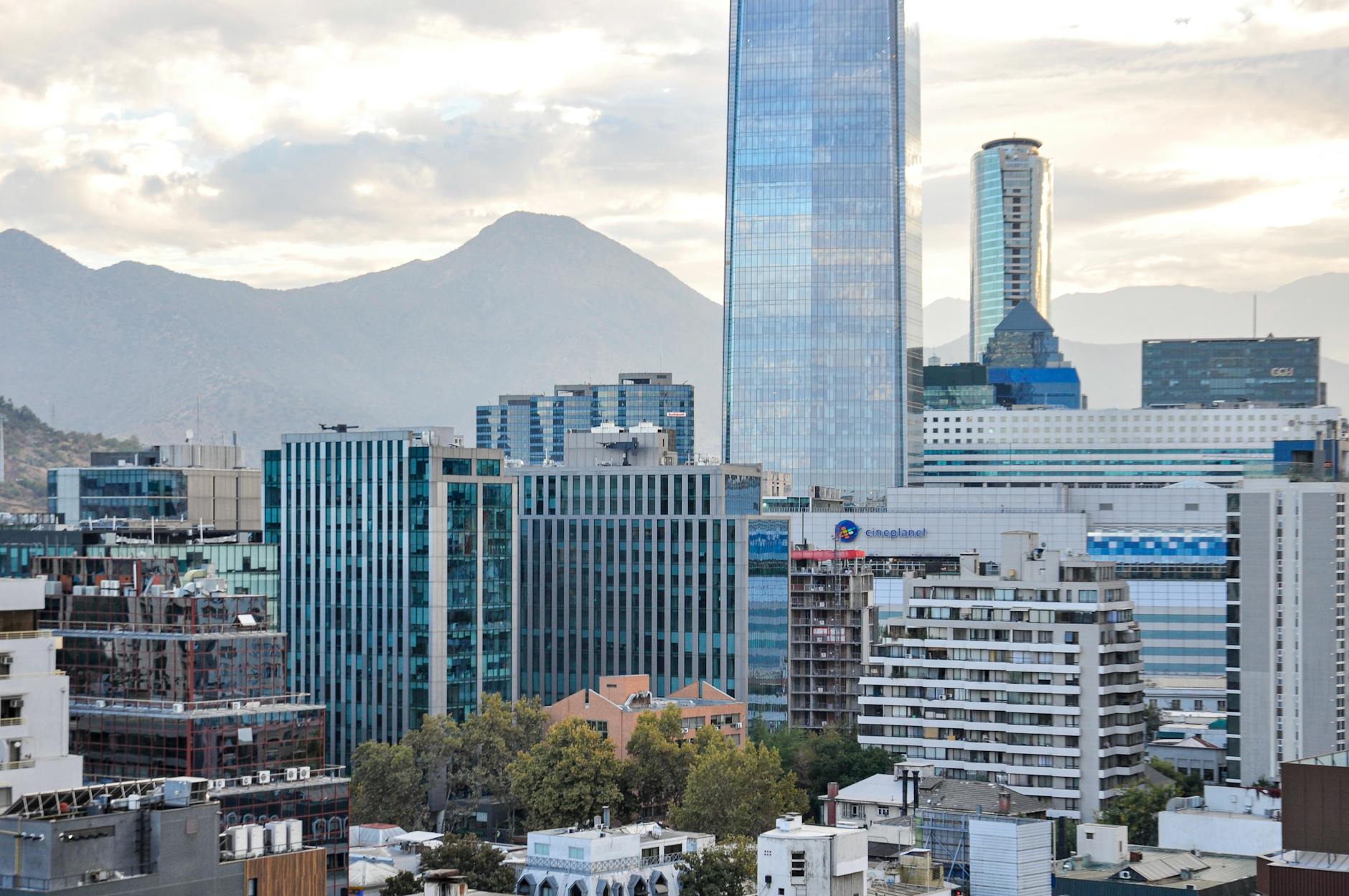
Santiago is the primary hub for PE and VC activity. Vitacura and Las Condes, collectively known as "Sanhattan," concentrate the largest managers. The market spans eight strategy types: mid-market buyout, growth equity, venture capital, infrastructure, private debt, secondaries, impact investing, and real estate.
Local general partners now operate on third and fourth fund generations, signaling a mature ecosystem increasingly independent of government-backed vehicles. Linzor Capital Partners has deployed approximately US$1.2 billion across 25 deals since 2006. Activa Alternative Assets (LarrainVial) manages USD 2.2 billion across 28 investment vehicles, with more than USD 1.2 billion concentrated in private debt.
Private Equity in Chile: Market Overview
The market covers a full spectrum of strategies: mid-market buyouts targeting companies with enterprise values of US$10 million to US$100 million-plus, growth equity rounds of US$5 million to US$10 million, early-stage venture capital from seed through Series A, and long-duration infrastructure funds investing in renewables, digital networks, and utilities. Chile operates within one of Latin America's most stable institutional frameworks, with investment-grade sovereign credit, a strong network of free trade and double taxation agreements, and a regulatory regime overseen by the Financial Market Commission (CMF). Pension funds (locally known as AFPs), family offices, insurance companies, and sovereign wealth funds form the LP base alongside CORFO.
CORFO's role in shaping this market cannot be overstated. Starting in 1997, the agency launched credit line programs for investment funds that could equal, double, or triple private contributions, seeding 70 credit lines as of 2022. Private capital has since overtaken CORFO-backed funding as the dominant financing source, reversing the pre-2010 dynamic when virtually all VC was government-financed.
The Sociedades por Acciones (SpA) corporate form, introduced in 2007 as a Chilean analogue to the Delaware C-corp, standardized investment structures. The Fintech Law of October 2022 and the CMF's ScaleX program, co-launched with the Santiago Stock Exchange and CORFO, further lowered barriers for companies accessing capital markets.
Santiago functions as Latin America's premier entry point for regional PE investment. Firms headquartered there typically carry a Latin America ex-Brazil or pan-LatAm mandate, using Chile as a test market before scaling portfolio companies into Colombia, Mexico, and Peru. Industry bodies including the Chilean Venture Capital Association (ACVC) and the Chilean Association of Investment Funds Management (ACAFI) formalize best practices. PRI signatories such as Linzor Capital reflect a broader commitment to responsible investment standards across the fund managers active in this market.
Firm Comparison at a Glance
The firms below represent the primary PE and VC managers active in Chile, ranging from multi-strategy platforms managing billions to sector-focused funds deploying seed tickets of US$1 million to US$5 million.
| Firm | AUM | Strategy | Sector Strength | Best Known For | HQ |
|---|---|---|---|---|---|
| Activa Alternative Assets (LarrainVial) | USD 2.2B | Multi-Strategy | Private Debt, Infrastructure | Market-leading private debt platform | Santiago (Las Condes) |
| Ardian | $176B (global) | PE / Infra / Secondaries | Industrials, Real Assets | Global secondaries capability | Paris (Santiago office) |
| CVC DIF | €19B (infra AUM) | Infrastructure | Energy Transition, Digital | Energy and digital infrastructure | Amsterdam (Santiago office) |
| Arroyo Energy Investment Partners | ~USD 2B deployed | Infrastructure PE | Renewable Energy, Power | Wind, solar, LNG in North America and Chile | Houston (Santiago office) |
| Linzor Capital Partners | ~USD 1.2B invested | Mid-Market Buyout | Education, Financial Services, Healthcare | 25 deals across LatAm ex-Brazil | Santiago (Vitacura) |
| Ecus Capital | USD 4B (intl. mutual funds) + 2 PE funds | Private Equity | Agri-Food, Asset Management | Long-running agri-food PE fund | Santiago (Las Condes) |
| Southern Cross Group | — | Mid-Market Buyout | Financial Services, Healthcare | Long-term LatAm value creation | Santiago |
| Patria Investments | — | Multi-Strategy | Infrastructure, Real Estate | Pan-LatAm diversified alternatives | Santiago / São Paulo |
| Mater Private Equity | — | Private Equity | Latin America broad | Regional FIP fund structure | Santiago (Las Condes) |
| Venturance Alternative Assets | — | Growth Equity / VC | Real Assets, Technology | Financial and strategic advisory | Santiago (Vitacura) |
| Tantauco Ventures | — | Venture Capital | AI, Technology | AI-focused Fund II (closed Oct 2025) | Santiago |
| Kayyak Ventures | — | Impact VC | Fintech, Healthcare, Foodtech | Social/environmental impact mandate | Chile |
| Taram Capital | — | Venture Capital | B2B Tech, Fintech | eCommerce and data-driven B2B | Santiago |
| Equitas Capital SpA | — | Private Equity | Mining, Industrials | Metals and mining specialist | Chile |
The AUM column reflects only figures confirmed in available data. Most Chile-focused GPs do not publicly disclose fund sizes. The strategic diversity across this table reflects the ecosystem's maturity: international platforms with Santiago offices sit alongside homegrown GPs on their third or fourth fund.
Top Picks by Investment Strategy
Largest Capital Manager: Activa Alternative Assets (LarrainVial) holds USD 2.2 billion in total assets under management across 28 investment vehicles, with a private debt book exceeding USD 1.2 billion. No other domestic manager in Chile comes close to this scale.
Mid-Market Buyout Leader: Linzor Capital Partners has deployed approximately US$1.2 billion across 25 transactions since 2006 and earned ESG Investing Awards 2025 recognition for the second consecutive year. With offices in Santiago, Mexico City, Bogotá, and Madrid, it offers the broadest geographic infrastructure of any Chile-based buyout firm.
Infrastructure Specialist: CVC DIF manages €19 billion in infrastructure assets globally and maintains a Santiago presence targeting energy transition, digital infrastructure, and transport in Latin America. For LPs seeking long-duration yield with ESG alignment, it is the most scaled option with a local footprint.
Top Renewable Energy Investor: Arroyo Energy Investment Partners has deployed approximately USD 2 billion since 2003 across wind, solar, gas, battery storage, and LNG assets in Chile and North America. Its Chilean office directly targets the country's renewable energy buildout.
Rising AI Venture Investor: Tantauco Ventures closed its second AI-focused fund in October 2025, cementing its position as the most specialized artificial intelligence VC firm operating from Santiago. Founders building AI-enabled businesses in Latin America have a dedicated institutional partner here.
Impact VC Pick: Kayyak Ventures deploys US$1 million to US$5 million tickets at seed and Series A into healthcare, fintech, and foodtech companies with explicit social and environmental mandates. It is the most clearly mission-driven early-stage investor in this market.
Agri-Food Specialist: Ecus Capital has raised two Chilean PE funds and managed USD 4 billion in international mutual funds since 1999. Its Ecus Agri Food Fund, which holds a 50% stake in AMA Time (organic fruit and vegetable purees), exemplifies sector depth that no other fund manager in this group matches.
Leading PE and VC Managers: Detailed Profiles
Linzor Capital Partners
The most active independent mid-market buyout firm based in Chile, Linzor has invested approximately US$1.2 billion across 25 deals since its 2006 founding by three former J.P. Morgan professionals: Tim Purcell, Alfredo Irigoin, and Carlos Ingham. Its investment thesis centers on Latin America ex-Brazil, targeting mid-market companies in education, financial services, healthcare, retail, technology, and telecommunications.
What distinguishes Linzor from most regional peers is its multi-office infrastructure spanning Santiago, Mexico City, Bogotá, and Madrid alongside institutional LP standards. Its ESG commitment has earned recognition from the ESG Investing Awards twice, most recently in 2025. The January 2025 exit from Grupo EFE is the firm's most recent completed transaction.
Business owners seeking a partner with regional scale-up capability and responsible investment credentials will find Linzor the benchmark mid-market buyout GP in this market.
Activa Alternative Assets (LarrainVial)
The private capital arm of LarrainVial, Chile's largest non-banking asset manager, Activa has operated as one of the region's largest private capital managers since 2005. With USD 2.2 billion in total managed capital across 28 investment vehicles, it leads the Chilean private debt market by managing more than USD 1.2 billion in direct lending and credit solutions.
Activa's multi-strategy platform covers private equity, infrastructure, and venture capital alongside its dominant private debt franchise, giving LPs access to the full private capital stack through a single manager. The firm is led by founding partner José Antonio Jiménez. Institutional investors seeking diversified exposure to Chilean and regional private credit with a two-decade track record will find Activa the strongest local manager by assets and vehicle count.
Patria Investments
One of Latin America's most tenured alternative asset managers, Patria has operated continuously since 1988 across private equity, infrastructure, real estate, credit, and public equities. Its pan-LatAm mandate delivers the broadest geographic coverage of any firm with a Santiago presence, supported by additional offices in São Paulo, Bogotá, Lima, and Mexico City.
Patria's competitive edge is depth across multiple asset classes within a single platform: LPs can access buyout, infrastructure, and real estate through coordinated strategies rather than building separate GP relationships. The firm manages capital on behalf of global pension funds, sovereign wealth funds, and insurance companies. LPs building a diversified LatAm alternatives allocation will find Patria offers the most comprehensive multi-strategy exposure available from a single manager with a Santiago base.
Southern Cross Group
Southern Cross Group has focused exclusively on Latin American private equity since 1998, making it one of the region's longest-running independent buyout GPs. The firm targets companies with enterprise values in the US$50 million to US$100 million range, emphasizing long-term value creation through strategic management improvements and capital structure optimization rather than financial engineering.
Its investment thesis prioritizes companies where competitive advantage can be strengthened through operational and governance improvements. While specific AUM figures are not publicly disclosed, consistent deal activity across healthcare, financial services, and retail over nearly three decades signals institutional LP backing through multiple fund cycles. Business owners in the US$50 million to US$100 million enterprise value range seeking a strategic partner with a 28-year regional track record should consider Southern Cross Group a primary contact.
Ardian
The global private investment house managing over US$176 billion in assets brings its full capability set to Chile through a dedicated Santiago office. Ardian's secondaries franchise is one of the largest globally, allowing LPs in Chilean funds to access liquidity solutions alongside primary investments.
Ardian became independent from AXA in 2013 and is today majority-owned by its employees. This structural alignment is a governance strength that institutional LPs consistently cite when evaluating the firm. For Chilean and regional LPs seeking access to global PE secondaries, infrastructure, and buyout strategies through a locally present manager, Ardian's Santiago office provides a uniquely broad entry point.
CVC DIF
CVC DIF is the infrastructure division of CVC, a global private markets manager with €200 billion in total assets under management. Its infrastructure-specific vehicle manages €19 billion dedicated to energy transition, digital infrastructure, transport, and utilities globally. The firm's Santiago office targets Chilean and LatAm infrastructure deal flow, with an explicit focus on the energy transition pipeline that Chile's renewable resource base makes particularly deep.
Chile's solar irradiance in the Atacama Desert and wind resources along its southern coastline create a structural pipeline of utility-scale infrastructure opportunities that few markets in Latin America can match. LPs seeking long-duration, ESG-aligned infrastructure returns with a global manager's institutional rigor and a dedicated local presence will find CVC DIF among the most relevant options in this market.
Arroyo Energy Investment Partners
The specialist energy infrastructure investor is based in Houston with a Santiago office and has deployed approximately USD 2 billion in equity since 2003. Its target assets include wind, solar, gas-fired generation, battery storage, and LNG infrastructure across North America and Chile. Arroyo's investment approach emphasizes active portfolio management: optimizing operations, monetizing arbitrage opportunities, and enhancing long-term contract value rather than passive asset holding.
Its Chilean presence positions the firm directly in one of Latin America's most active renewable energy buildout markets. The investment thesis is reinforced by long-term contracts and downside protection mechanisms. LPs seeking yield-oriented infrastructure exposure with a power sector specialist will find Arroyo a strong fit.
Ecus Capital
One of Chile's oldest PE managers, Ecus has raised two domestic PE funds and managed USD 4 billion in international mutual funds since its 1999 founding. The current flagship is the Ecus Agri Food Fund, reflecting a deliberate pivot toward Chile's agricultural sector. A 50% stake in AMA Time, which produces organic fruit and vegetable purees, illustrates the fund's thesis of consolidating agri-food processing businesses with export potential.
Few investment managers in this market combine two decades of local PE experience with the sector depth that Ecus brings to agribusiness. LPs seeking exposure to Chile's agricultural export economy through an experienced local GP will find the Ecus Agri Food Fund the primary option in this market.
Tantauco Ventures
The most specialized AI-focused VC firm operating from Santiago, Tantauco was founded in 2018 by Cristóbal Piñera and Juan Turner. The firm closed its second fund in October 2025 with a mandate covering early-stage companies where artificial intelligence is core to the business model, not a feature. Its geographic scope spans Latin America, giving portfolio companies a regional growth path from a Chilean base.
The fund targets the intersection of AI capabilities and local market problems, including fintech, enterprise software, and sector-specific applications. Founders building AI-first companies in Latin America who need a local institutional partner with a dedicated thesis should contact Tantauco Ventures first.
Kayyak Ventures
Kayyak Ventures deploys seed and Series A capital of US$1 million to US$5 million into mission-driven companies across healthcare, fintech, foodtech, and e-commerce, with an explicit social and environmental impact mandate. The firm invests across Latin America, North America, and Europe, giving its portfolio companies access to a cross-regional network unusual for a fund of this ticket size.
What makes Kayyak distinctive is the combination of financial return expectations with measurable social and environmental outcomes, reflecting growing LP demand for impact-oriented private capital. The firm operates from Chile and participates in the country's emerging impact investing ecosystem alongside CORFO-supported programs that favor ESG-aligned fund managers.
Investment Trends Shaping Chile's Private Capital Market
Fintech and Financial Inclusion Driving VC Volumes
Fintech has been the single largest sector for venture capital deployment in Chile over recent years, driven by the country's high mobile penetration alongside historically low banking rates that leave room for disruptive financial services. Fintual's US$39 million Series round, led by Sequoia Capital in 2021, established a benchmark for Chilean fintech valuations and attracted international institutional attention. The October 2022 Fintech Law formalized the regulatory environment, creating a foundation for the next wave of fintech investment.
Renewable Energy Attracting Long-Duration Infrastructure Capital
Chile's Atacama Desert ranks among the world's highest-irradiance solar environments, and its southern coastline generates consistent wind resources, making the country a structural destination for energy infrastructure capital. Arroyo Energy has deployed approximately USD 2 billion in power assets in Chile and North America since 2003, while CVC DIF's €19 billion infrastructure platform explicitly targets energy transition in the region. Government support and a competitive electricity market have sustained deal flow in this sector through multiple macroeconomic cycles.
AI-Enabled Businesses as the Next Venture Cycle
Artificial intelligence has displaced SaaS as the defining theme in Chile's early-stage venture market. Tantauco Ventures closed an AI-focused second fund in October 2025, and the broader LatAm VC ecosystem has realigned investment theses toward companies where machine learning or generative AI is structurally embedded. The ScaleX program, which enables growth-stage companies to access public capital markets at lower cost, creates a potential liquidity pathway for AI portfolio companies that previously faced a binary IPO-or-sale exit dynamic.
ESG Integration Moving from Optional to Expected
Linzor Capital Partners won the ESG Investing Awards 2025 for the second consecutive year and participates in Principles for Responsible Investment (PRI) conferences, reflecting a broader shift in which ESG performance is now a condition of institutional LP capital rather than a differentiator. CORFO and the ScaleX program prioritize sustainable and innovation-driven businesses. Kayyak Ventures and ZOMA LAB operate explicit impact mandates. For GPs in this market, ESG reporting capacity and PRI signatory status are increasingly baseline requirements rather than optional credentials.
Private Capital Displacing Government-Backed Vehicles
The ecosystem has undergone a structural shift: before 2010, all Chilean VC was financed through CORFO programs. Local GPs on their third and fourth funds now raise predominantly private capital from Chilean AFPs, family offices, and international institutional investors, with CORFO playing a supporting rather than dominant role. The emergence of corporate venture capital divisions within traditional Chilean companies and the active participation of family offices as LPs signal that private capital infrastructure has reached self-sustaining scale.
How to Evaluate PE and VC Fund Managers
Fund generation is the single most useful proxy for GP maturity. A manager on its third or fourth fund has demonstrated the ability to raise from institutional LPs across multiple vintages and has at least partial exit data available. First-fund managers without institutional LP backing carry substantially higher execution risk.
Geographic mandate clarity matters as much as strategy. Many Chilean GPs carry a Latin America ex-Brazil or pan-LatAm scope, which changes the risk profile, the deal sourcing network, and the exit options available to portfolio companies. Verify whether the GP's team has operational presence in target markets beyond Santiago, as deal execution quality across Colombia, Mexico, and Peru requires local relationships that a Santiago-only team cannot reliably maintain.
For founders in active fundraising, CORFO accreditation and FIP (Fondo de Inversión Privado) fund structure signal compliance with Chilean regulatory standards. Portfolio companies redomiciled to Delaware or Cayman structures indicate the GP's familiarity with international LP requirements. Verify the exit track record: the quality of realized exits through strategic sales, secondaries, and recapitalizations reveals far more about a GP's value creation capability than unrealized portfolio marks.
For institutional LPs, internal rate of return (IRR) and multiple on invested capital (MOIC) data across at least one completed fund is the minimum standard for commitment. Assess whether the performance fee (carried interest) structure aligns with LP interests, and confirm whether co-investment rights are available. Co-investment is increasingly a condition of anchor LP commitments in this market.
Which Firm Fits Your Needs?
Founders seeking mid-market growth capital above US$10 million should prioritize Linzor Capital Partners and Southern Cross Group. Both write equity checks into established companies and bring regional expansion networks. Linzor's offices in four cities and its ESG credentials make it particularly relevant for founders who anticipate needing support with international LP introductions as the company scales.
For early-stage founders raising US$1 million to US$5 million at seed or Series A, Kayyak Ventures offers capital combined with social impact alignment. Taram Capital specifically targets B2B tech companies in fintech, eCommerce, and data services. Founders building AI-first companies should contact Tantauco Ventures directly, given its dedicated Fund II mandate closed in late 2025.
LPs building diversified alternative asset allocations can approach Activa Alternative Assets (LarrainVial) for multi-strategy exposure including the market's deepest private debt platform, or Patria Investments for a pan-LatAm multi-asset class mandate covering PE, infrastructure, and real estate. Infrastructure LPs seeking energy transition exposure with long-duration yield profiles should evaluate both CVC DIF, for its €19 billion global infrastructure franchise, and Arroyo Energy Investment Partners, for its specialized power sector track record in Chile specifically.
Methodology
Firm profiles and market data in this article are drawn from publicly available information including firm websites, industry publications, and InvestChile data as of 2025. Deal data including the Cornershop acquisition, Fintual's Sequoia round, and NotCo's funding history reflects publicly confirmed transaction values. AUM figures are cited only where confirmed by primary sources: Linzor Capital (~US$1.2B), Activa Alternative Assets (USD 2.2B), Ardian ($176B globally), CVC DIF (€19B infrastructure AUM), and Arroyo Energy (~USD 2B deployed). Firms were selected for profiles based on confirmed investment activity in Chile's private equity market and availability of substantive data. Market statistics including the VC record of US$1.025 billion in 2021 and CORFO's cumulative commitments are drawn from VC Chile and CORFO public reports covering 2022 to 2023.
Frequently Asked Questions
Written by
Jodie White
Private Markets Researcher
Jodie White researches private equity and venture capital firms across sectors, tracking investment focus, platform activity, and market positioning for ZoomInvestors.
Related Topics
Explore More
Read more articles on our blog