Princeton Private Equity: Top Firms in 2026
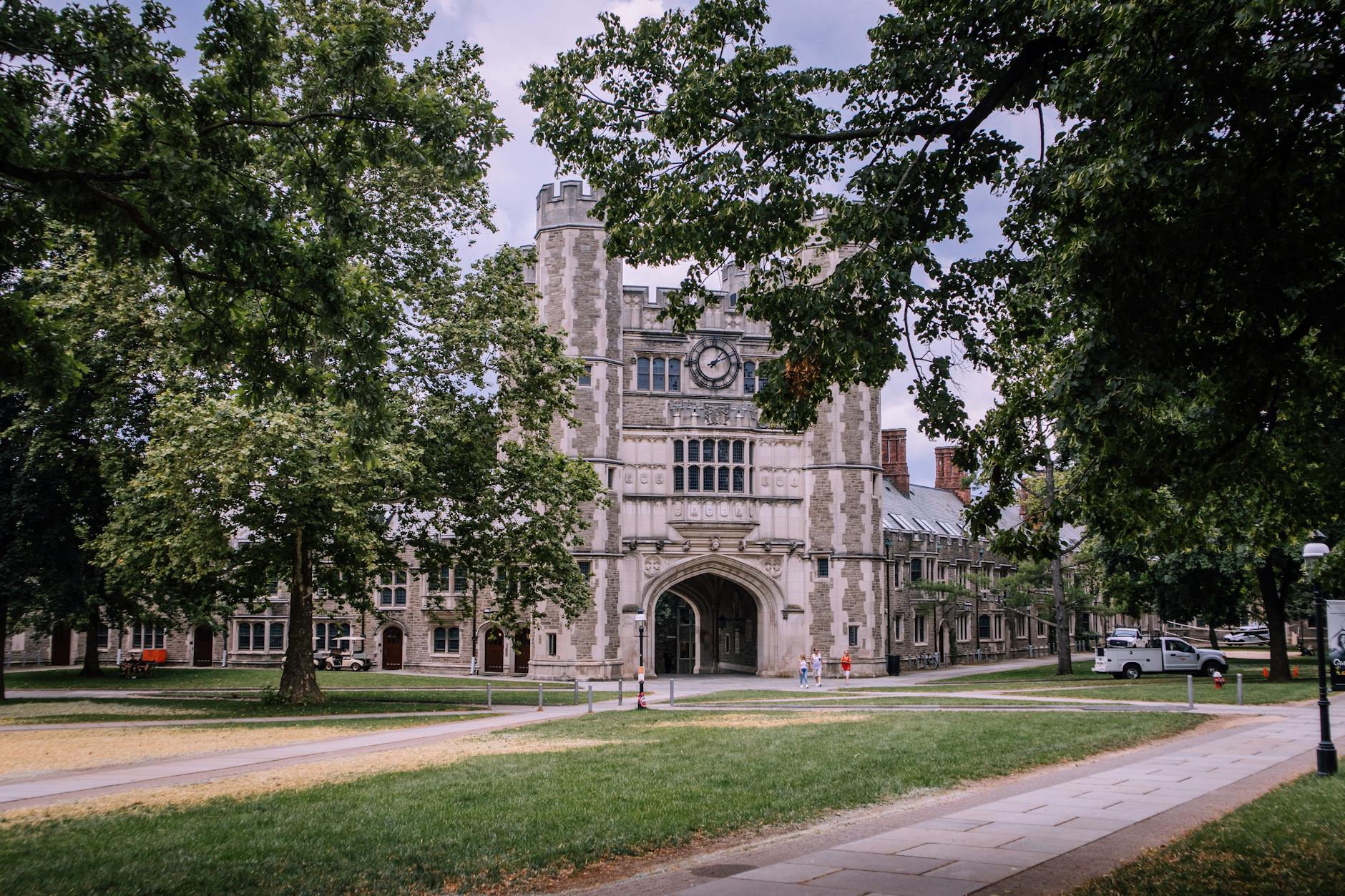
Part of Private Equity
Key Facts: Princeton's Franchise and Multi-Unit PE Landscape
- Princeton Equity Group closed its second fund at a hard cap of $575M in August 2023, surpassing its $475M target with backing from endowments, foundations, sovereign wealth funds, and family offices.
- The firm's estimated assets under management range from $722M to approximately $1.2B, reflecting capital deployed across 62 total investments since founding.
- Princeton Equity Group's active portfolio spans 35+ franchise concepts and 6,000+ locations, with more than 1,000 additional units currently in development.
- The firm opened over 800 franchise locations in 2023 alone and awarded more than 600 additional franchise agreements that year.
- Princeton NJ-based PE investors in this niche take control positions in growth-stage franchisors across consumer, healthcare, and business services sectors.
- Roark Capital, the largest franchise-focused buyout firm globally, manages $41B in assets under management and backs brands generating approximately $97B in annual system revenues across 112,000+ locations.
Princeton Private Equity: Franchise and Multi-Unit Market Overview
Princeton, New Jersey has produced two institutionally active private equity firms with complementary but non-overlapping mandates. Princeton Equity Group (originally Princeton Ventures, rebranded in 2019) takes control investments exclusively in franchisors and multi-unit operators. Princeton Capital Partners focuses on concentrated minority positions in undervalued small-cap public healthcare companies, operating an entirely separate strategy.
The franchise and multi-unit PE niche demands skills that generalist buyout shops rarely develop. These include unit economics analysis, franchisor support infrastructure assessment, and franchisee satisfaction evaluation. Investors here underwrite both a company's financials and the replicability of its operating model across an independent operator network. Princeton Equity Group's proprietary GrowthEdge platform reflects this specialized approach, providing portfolio companies with hands-on franchise development support rather than purely financial engineering.
Princeton sits between New York City and Philadelphia, placing its firms within reach of two major financial centers and a broad mid-Atlantic deal corridor. Capital in the franchise niche flows primarily into growth-stage franchisors with proven unit economics across consumer services, healthcare, and business services. That pattern is consistent with Princeton Equity Group's deal activity from 2021 through 2025.
Firm Comparison at a Glance
The following table covers the leading franchise and multi-unit PE investors, including both Princeton NJ-based firms and the most active national players. Strategies range from control buyouts of established brands to permanent-capital minority structures for operators seeking growth capital without a near-term exit.
| Firm | Strategy | Sector Strength | Best Known For | HQ |
|---|---|---|---|---|
| Roark Capital | Buyout | Consumer Franchise, QSR | $9.5B Subway acquisition, 112,000+ locations | Atlanta, GA |
| Thompson Street Capital Partners | Buyout | Business Services, Restaurant | Freddy's acquisition, $4.5B AUM | St. Louis, MO |
| Princeton Equity Group | Control Buyout / Growth Equity | Consumer, Healthcare, Business Services | Exclusive franchise mandate, $575M Fund II | Princeton, NJ |
| Main Post Partners | Growth Equity | Restaurant, Personal Services, Home Services | Flynn Group, 2,600+ units, $4B in sales | San Francisco, CA |
| Argonne Capital Group | Buyout | Restaurant, Retail | 350+ IHOP locations, $1.3B+ equity deployed | Atlanta, GA |
| Savory Fund | Growth Equity | Emerging Restaurant Concepts | 145 restaurants, 9 brands, $200M Fund III | Lehi, UT |
| Franchise Equity Partners | Passive Minority | Franchise Operators (multi-sector) | Permanent capital structure, 7 Brew deal | — |
| Snapdragon Capital Partners | Growth Equity | Health and Wellness, Consumer Services | Franchisee-level focus, Club Pilates investment | Fairfield, CT |
| Princeton Capital Partners | Public Equity (Concentrated) | Healthcare Services | Undervalued small-cap healthcare, 52 investments | Princeton, NJ |
| Gala Capital Partners | Growth Equity | Restaurant Franchise | 35+ years franchising expertise | — |
Princeton Equity Group and Princeton Capital Partners share a name and geography but serve entirely different markets. The former dominates franchisor control investing from New Jersey; the latter operates as a healthcare public equity specialist with no overlap in deal activity.
Top Picks by Investment Strategy
Largest AUM in Franchise PE: Roark Capital ($41B) leads by an order of magnitude. Its $9.5B acquisition of Subway and $1B investment in Dave's Hot Chicken demonstrate the scale at which Roark operates relative to any peer.
Purest Princeton Franchise Play: Princeton Equity Group is the only PE firm headquartered in Princeton, NJ with an exclusive franchise and multi-unit mandate. Its $575M Fund II hit hard cap with institutional LP backing, and its 62 total investments cover more franchise verticals than any peer at comparable fund size.
Top Healthcare Franchise Investor: Princeton Equity Group leads this subcategory with a coherent thesis built over three consecutive years. Investments in Ellie Mental Health (2022), Stretch Zone (2023), and Allura Skin, Laser, and Wellness Clinic (2025) span outpatient mental health, assisted stretching, and aesthetic clinics.
Growth Equity Leader in Emerging Restaurant Concepts: Savory Fund's $200M Fund III and direct operation of 145 restaurants across 9 brands give it the deepest hands-on operating model for early-stage restaurant franchisors. Swig and R&R BBQ serve as its flagship platform investments.
Multi-Unit Franchisee Consolidator: Argonne Capital Group has deployed more than $1.3B in equity since 2003, operating 350+ IHOP locations as the brand's single largest franchisee alongside Applebee's, Krystal, and additional concepts.
Permanent Capital for Franchise Operators: Franchise Equity Partners, backed by HPS Investment Partners ($80B+ AUM), plans $1B in passive minority deployments across up to 20 franchise businesses. Its 7 Brew investment, targeting 200 new coffee drive-thru restaurants over five years, illustrates a long-duration structure rare among franchise fund managers.
Mid-Market Buyout Crossover: Thompson Street Capital Partners ($4.5B AUM) applied mid-market buyout infrastructure to franchise through its 2021 acquisition of Freddy's Frozen Custard and Steakburgers, bringing business services discipline to a consumer franchise category.
Most Active Multi-Unit Franchisee Scale: Main Post Partners backed Flynn Group, the world's largest restaurant franchisee, with 2,600+ units and $4B in sales across Taco Bell, Panera Bread, Arby's, Applebee's, Pizza Hut, Wendy's, and Planet Fitness. This represents the largest multi-unit franchisee platform investment on record.
Top Franchise and Multi-Unit PE Firms in Detail
Princeton Equity Group
The defining franchise-focused private equity firm in New Jersey, Princeton Equity Group holds an investment mandate that excludes everything except franchisors and multi-unit operators. Its second fund closed at a $575M hard cap in August 2023, above its $475M target, with commitments from endowments, foundations, sovereign wealth funds, and asset managers. Across 62 total investments and 29 exits, the firm has built a deal count that outpaces most peers at comparable fund size.
Its 2025 portfolio additions, including the Barry's leveraged buyout, LOF Xpress Oil Change, and Allura Skin, Laser, and Wellness Clinic, confirm deal flow continuity across fitness, automotive, and healthcare verticals. Co-founders James Waskovich and Douglas Kennealey built the GrowthEdge operational platform, which provides board governance, franchise development infrastructure, and hands-on expansion support rather than purely financial structuring.
Roark Capital
No other general partner in franchise buyout investing operates at Roark's scale. With $41B in AUM and ownership of brands across 112,000+ locations generating approximately $97B in annual system revenues, Roark is the institutional benchmark for large-cap franchise PE. Its $9.5B acquisition of Subway set the standard for franchise M&A transaction size, while its $1B investment in Dave's Hot Chicken shows appetite for high-velocity emerging concepts alongside mature platform acquisitions.
Franchise networks and founders seeking capital at significant scale, typically above $500M in system sales, will find Roark among the few fund managers with both the capital and the infrastructure to execute at that transaction size.
Main Post Partners
Main Post Partners built its franchise investment thesis around the franchisee layer rather than franchisors, creating a distinct niche within private equity. Its relationship with Flynn Group best illustrates the firm's scale and multi-brand operating expertise. Flynn Group is the world's largest restaurant franchisee, operating 2,600+ units generating $4B in annual sales across Taco Bell, Panera Bread, Arby's, Applebee's, Pizza Hut, Wendy's, and Planet Fitness.
The San Francisco-based firm takes both minority and majority positions, giving it flexibility across operator growth stages. Its investment thesis prioritizes demonstrated multi-unit execution capacity over brand selection, making it a natural partner for experienced franchisee operators seeking capital for geographic expansion or add-on acquisition programs.
Argonne Capital Group
Argonne Capital Group's $1.3B+ in equity deployed since 2003, combined with its position as the largest IHOP franchisee operating more than 350 locations, establish it as the most tenured direct-operator among institutional PE investors. Unlike firms that back franchisors, Argonne operates primarily as a franchisee, running units across Applebee's, Krystal, Stevi B's Pizza Buffet, On The Border, and Sonny's BBQ. This direct operational model gives its deal sourcing a ground-level quality assurance filter that purely financial buyers lack.
Atlanta-based and sector-concentrated in restaurant and retail, Argonne suits operators looking for a buyer with direct P&L accountability rather than a firm underwriting unit economics from a spreadsheet.
Savory Fund
Savory Fund centers its investment thesis on one question most fund managers avoid: which emerging restaurant concept deserves institutional capital before it becomes obvious? The Lehi, Utah-based firm directly operates 145 restaurants across 9 brands in 11 states, including Swig, R&R BBQ, PINCHO, Via 313 Pizzeria, Mo' Bettahs, and Hash Kitchen. Fund I and Fund II each closed at $100M; Fund III closed at $200M.
This operating-first model creates a verifiable earnings track record that Savory demonstrates to franchise development partners rather than merely projects. Restaurant concept founders who have validated unit economics across 10-30 locations but lack the capital to scale nationally represent the firm's core deal flow target.
Franchise Equity Partners
Franchise Equity Partners occupies a structural gap in the franchise capital market: permanent minority capital without the exit pressure of traditional PE fund timelines. Backed by HPS Investment Partners, which manages over $80B in AUM, the firm plans to deploy $1B in passive minority positions across up to 20 franchise businesses. Its 2025 investment in 7 Brew, targeting 200 new coffee drive-thru restaurants over five years, illustrates the long-duration, operator-friendly structure that sets this firm apart from control-oriented general partners.
Operators who have built profitable, scalable systems but are unwilling to transfer a controlling stake will find this permanent capital structure a credible alternative to traditional control buyout investors.
Snapdragon Capital Partners
Snapdragon Capital Partners targets franchisees rather than franchisors, investing in operators who build out multi-unit territories within established wellness and consumer service brands. Its $30M+ investment in Spartan Fitness Holdings, the largest Club Pilates franchisee, and its backing of Fortis Franchise Group, the largest Mathnasium franchisee, demonstrate a repeatable playbook: identify the leading franchisee within a fast-growing brand, then provide growth capital for territorial expansion and bolt-on acquisitions.
The Fairfield, Connecticut-based firm's health and wellness focus aligns with sustained consumer spending growth in fitness, education, and personal care. This franchisee-level approach generates lower entry valuations than franchisor buyouts while capturing the brand momentum of proven franchise systems.
Thompson Street Capital Partners
Thompson Street Capital Partners brings $4.5B in AUM and a mid-market buyout track record across business services, life sciences, and technology to the franchise sector. Its 2021 acquisition of Freddy's Frozen Custard and Steakburgers marked a deliberate expansion into restaurant franchise, applying business services discipline to a consumer brand with strong unit economics. St. Louis-based and institutionally scaled, the firm suits franchise businesses seeking a partner with deep M&A infrastructure and capital to support add-on acquisitions and geographic roll-outs.
Its business services heritage makes the firm particularly attentive to recurring-revenue characteristics within franchise operating models.
Princeton Capital Partners
Princeton Capital Partners represents the healthcare public equity dimension of Princeton, NJ's investment ecosystem, operating a strategy entirely distinct from franchise PE. The firm takes concentrated minority positions in undervalued small-cap public healthcare companies, holding as few as a handful of positions at any time. Since 2008, it has made 52 investments across companies including Addus HomeCare, Brookdale Senior Living, Tandem Diabetes Care, Health Catalyst, and CareDx; 24 of those companies were subsequently acquired by third parties.
This concentrated approach, combining large positions with active board engagement, functions closer to constructive public equity investing than traditional buyout. Healthcare executives at small-cap public companies seeking an engaged institutional investor with over 25 years of sector expertise will find Princeton Capital Partners a distinct alternative to passive fund managers.
Gala Capital Partners
Gala Capital Partners brings over 35 years of franchising industry expertise to its growth equity investments in multi-unit restaurant concepts. Portfolio companies, including Mooyah Burgers, Cicis Pizza, and Dunn Brothers Coffee, reflect a focus on brands with established systems and remaining white space for franchise territory expansion. Gala's founder-operator perspective shapes an investment thesis built on franchisor support infrastructure depth rather than brand recognition alone. Restaurant concepts that have validated unit economics but need capital and operational guidance to build out their franchise development pipeline represent the firm's ideal target.
Investment Trends and Capital Flows
Healthcare Services Franchises Attract Outsized Capital
Outpatient mental health, wellness clinics, and skin care franchises have become the fastest-growing category in franchise PE deal origination. Princeton Equity Group's investments in Ellie Mental Health (2022), Stretch Zone (2023), and Allura Skin, Laser, and Wellness Clinic (2025) reflect a systematic healthcare franchise thesis built on demand for accessible outpatient services through scalable franchise models. Provider shortages in mental health and aesthetic medicine create franchise concepts with low competitive density and above-average unit-level earnings.
Consumer Wellness and Fitness Franchise Consolidation
Fitness franchise operators have become prime targets for both franchisor-level and franchisee-level PE capital simultaneously. Princeton Equity Group's 2025 buyout of Barry's and its 2021 investment in D1 Training represent franchisor control investments, while Snapdragon Capital Partners' backing of Spartan Fitness Holdings demonstrates parallel consolidation at the franchisee layer. Capital across franchise-focused funds continues to flow into premium fitness, assisted wellness, and recovery services where unit-level economics support the build-and-grow investment thesis.
Home and Automotive Services Roll-Ups Accelerate
Fragmented service franchise categories, including hydraulic repair (Pirtek), oil change (LOF Xpress Oil Change, Fausak Express Lube), and residential cleaning (1-800-Textiles), have attracted systematic roll-up capital from Princeton Equity Group across its 2023-2025 deal activity. These sectors share a common profile: high recurring revenue, low capital intensity per location, and limited digital disruption risk relative to retail or restaurant. The platform acquisition strategy, where an initial company purchase establishes a brand with expansion potential followed by add-on acquisitions in adjacent categories, is particularly effective in home services and automotive.
Permanent Capital Structures Entering Franchise PE
Franchise Equity Partners' passive minority model signals a structural innovation in how institutional capital enters franchising. Traditional PE fund structures with 7-10 year investment horizons create misalignment with franchise systems that require 15-20 years to achieve full geographic saturation. Permanent capital structures without forced exit timelines allow fund managers to stay aligned with franchisor development plans across multiple build cycles.
Restaurant Franchisee Consolidation at Institutional Scale
Main Post Partners' backing of Flynn Group and Argonne Capital Group's direct operation of 350+ IHOP locations represent the institutionalization of the multi-unit franchisee segment. Multi-brand operators with diversified cash flow profiles now command premium valuations relative to single-brand franchisees. This reflects institutional recognition of organizational infrastructure as a competitive advantage in franchise roll-up strategies.
How to Evaluate PE Investors in This Space
Proven unit-level economics are the non-negotiable filter for franchise PE. Before approaching any investor, franchisors should prepare unit-level profit and loss data, franchisee satisfaction scores, and a franchise development pipeline with realistic territory projections. Princeton Equity Group and Savory Fund both cite management alignment with long-term brand vision as a decisive deal selection criterion, placing it alongside financial performance.
Match your capital need to the fund size and strategy of the general partner. Roark Capital writes checks for billion-dollar brands with established national distribution. Princeton Equity Group targets growth-stage franchisors where a mid-market fund can meaningfully accelerate development velocity. Approaching the wrong firm by deal size creates misaligned expectations and wastes process time on both sides.
Evaluate the team's operator composition alongside investment credentials. Princeton Equity Group's investment committee includes seasoned franchise operators working alongside investment professionals. Savory Fund operates 145 restaurants directly to stress-test its own investment criteria. For limited partners evaluating franchise-focused funds, fund vintage timing and carried interest structure both matter. A general partner deploying its third fund carries different risk-return characteristics than one in early deployment of Fund I. Performance fee structures determine how GP incentives align with LP returns across the full fund lifecycle.
Red flags apply equally to both parties in the diligence process. Weak unit-level economics, high franchisee turnover, and management teams misaligned with brand culture are the three indicators that Princeton Equity Group's portfolio company CEOs consistently identify as predictors of post-investment friction.
Which Firm Fits Your Needs?
Franchise founders operating growth-stage concepts with proven unit economics should evaluate Princeton Equity Group as their primary contact for control investment backed by operational infrastructure. Founders who want growth capital without ceding operational control have a structurally different option in Franchise Equity Partners. Its passive minority model, backed by HPS Investment Partners, preserves operator authority while providing meaningful expansion capital.
Restaurant and food service operators with 20-150 locations seeking institutional backing for national expansion should evaluate Savory Fund's growth equity model, which combines capital with a 145-restaurant operating platform. Established multi-unit franchisees in restaurant, personal services, or home services seeking capital for geographic expansion or multi-brand diversification will find Main Post Partners or Argonne Capital Group more relevant, given their collective track records managing franchise systems at $1B+ in enterprise value.
LPs building diversified alternatives allocations with franchise exposure have two distinct risk profiles available. Princeton Equity Group's $575M Fund II in the lower middle market provides concentrated franchise PE exposure with high deal velocity across consumer, healthcare, and business services verticals. Roark Capital at $41B AUM delivers large-cap diversification across the full spectrum of consumer franchise categories. Healthcare-focused LPs can access franchise healthcare specifically through Princeton Equity Group's sub-portfolio in Ellie Mental Health, Stretch Zone, and Allura Skin, which has functioned as a dedicated healthcare franchise vertical within the broader fund strategy since 2022.
Methodology
This guide to Princeton private equity was compiled using public data from PE industry databases, firm websites, press releases, and web search enrichment covering 2023-2025 disclosures. Firms were included based on confirmed Princeton, NJ headquarters or an explicit franchise and multi-unit investment mandate with documented public deal history. AUM figures for Princeton Equity Group reflect a reported range of $722M to approximately $1.2B, with the discrepancy preserved throughout. Roark Capital's $41B AUM and Thompson Street's $4.5B AUM are sourced from firm disclosures. Fund size data reflects the most recently closed vehicles as of the data collection period. All editorial picks and rankings are based entirely on publicly available data and are not influenced by paid placement or firm relationships.
Frequently Asked Questions
 Google AI Mode
Tells Google to show you more from ZoomInvestors in AI, Search and Discover.
Tells Google to show you more from ZoomInvestors in AI, Search and Discover.
Written by
Andre Miller
Business Analyst
Andre Miller is a Business Analyst at ZoomInvestors, covering private equity and venture capital firms across geographies and sectors. His work focuses on deal structures, investor criteria, and the market trends that shape institutional capital flows.
Related Topics
Explore More
Read more articles on our blog